Against the Odds
They Threw Her From a Moving Train, and Two Years Later She Climbed Everest
Arunima Sinha was traveling to Delhi in April 2011 when her life changed in a matter of seconds. She was on her way to take an exam for India’s Central Industrial Security Force, hoping to build a career after years of playing competitive sports.
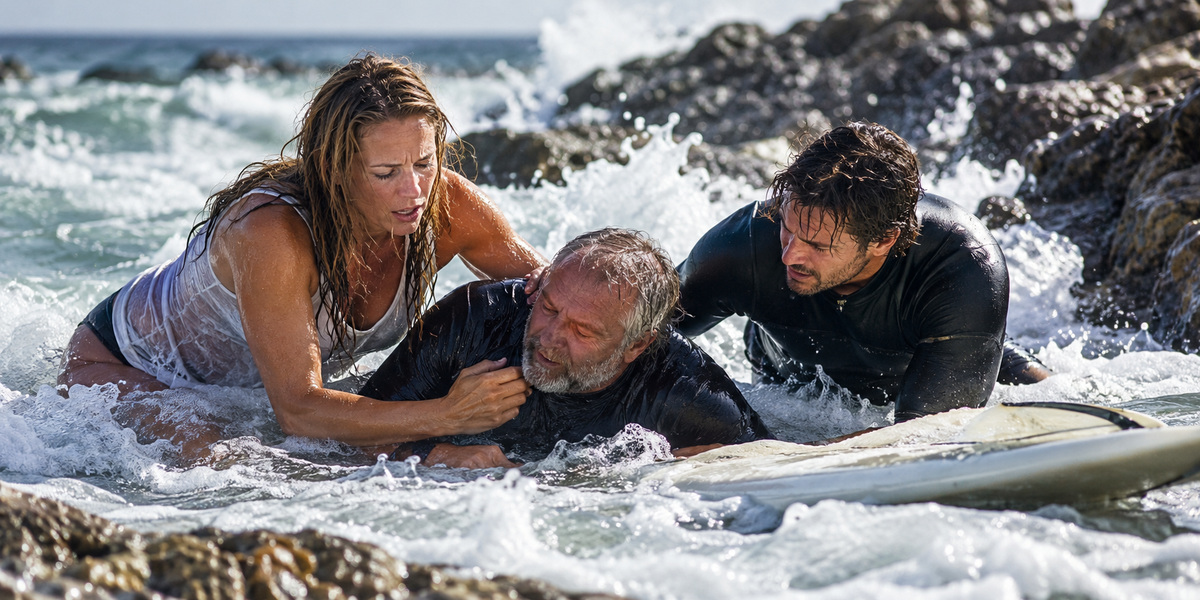
During the journey, men on the train tried to steal her gold chain and belongings. Arunima fought back, and they threw her from the moving train. She landed near another set of tracks, where an approaching train struck her and severely injured her left leg.
She survived, but the injuries were devastating. Doctors eventually had to amputate her leg to save her life. Arunima had gone from competing in volleyball and football at the national level to facing the possibility that she might never walk normally again.
A Decision Made in a Hospital Bed
After the attack, Arunima was treated at a hospital in Bareilly before being transferred to the All India Institute of Medical Sciences in New Delhi. She faced a long recovery and the challenge of learning to live with a prosthetic leg.
But while she was still receiving treatment, she began thinking about something much bigger than simply getting back on her feet. She wanted to accomplish something that would change the way people saw her, and she set her sights on Mount Everest.
It was an extraordinary goal for someone who had never been a professional mountaineer and was still recovering from losing a leg. But Arunima had spent years as an athlete, and she was determined to put that experience to work in a completely different sport.
With help from fundraising efforts, she obtained a prosthetic leg and began preparing for the enormous challenge ahead. First, she needed to learn how to climb mountains.
Learning to Climb All Over Again
After leaving the hospital, Arunima completed a basic mountaineering course at the Nehru Institute of Mountaineering in Uttarkashi. She had to learn how to use climbing equipment, move across difficult terrain and handle the physical demands of high-altitude climbing.
She also sought guidance from Bachendri Pal, the first Indian woman to reach the summit of Mount Everest. Pal was leading the Tata Steel Adventure Foundation and had the experience Arunima needed.
According to Tata Steel, Pal encouraged her rather than dismissing the idea. She told Arunima that making the decision to climb Everest with a prosthetic leg meant she had already won half the battle. The rest would come down to training and preparation.
And there was plenty of work ahead.
Climbing with a prosthetic leg presented problems that most other mountaineers didn’t face. The fit of the prosthesis could change under pressure, and hours of movement could cause painful rubbing and damage to her skin. Keeping her balance on steep, icy slopes required enormous concentration.
Arunima spent months building her strength and learning how to handle those challenges. In 2012, she climbed Island Peak in the Himalayas, gaining valuable experience with snow, ice and high-altitude conditions.
Each training climb brought her closer to the much larger mountain she wanted to conquer. By the spring of 2013, she was ready to attempt Everest, with Tata Steel sponsoring her expedition.
Fifty-Two Days on Mount Everest
Arunima began her Everest expedition in early April 2013. The journey from Kathmandu to the summit would take 52 days, with weeks spent climbing, adjusting to the altitude and preparing for the final push.
Even after all her training, the mountain was punishing. She later described problems with her prosthetic leg, including painful pressure and bleeding. She had to manage those injuries while climbing through freezing temperatures and increasingly difficult terrain.
Every stage demanded strength and patience. She had to navigate steep ice, fixed ropes and dangerous sections of the mountain while keeping her prosthetic leg functioning well enough to continue.
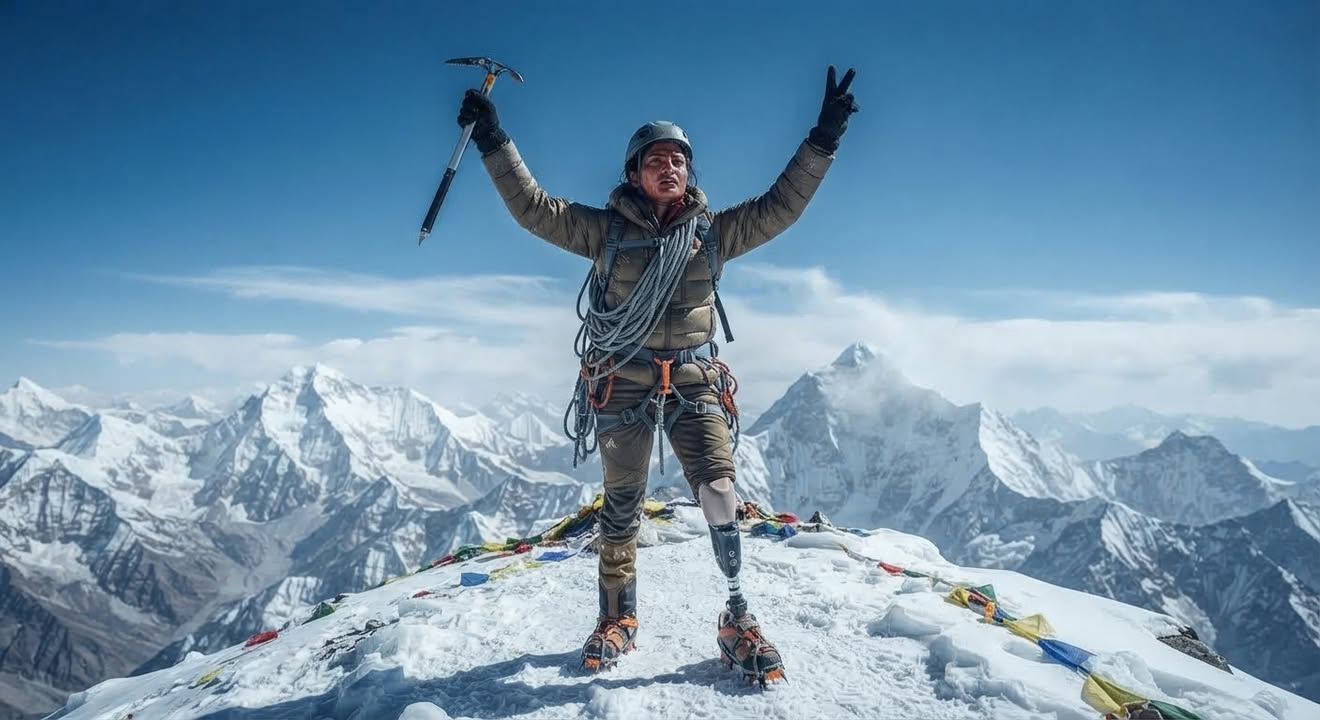
On May 21, 2013, Arunima finally reached the summit. It was 10:55 in the morning when she stood at the highest point on Earth and raised the Indian flag. Just over two years after losing her leg in the train attack, she had become the first female amputee in the world to summit Mount Everest.
The achievement made national headlines in India. Tata Steel, which had supported her climb, celebrated the historic moment, and Arunima became an inspiration to people facing difficult recoveries of their own.
Everest Was Only the Beginning
After reaching the top of Everest, Arunima could have ended her mountaineering career with an achievement few climbers ever accomplish. Instead, she started planning more expeditions.
She wanted to climb the highest mountains on multiple continents, traveling to places with completely different climates and climbing conditions. Her success on Everest had given her the experience and confidence to take on those challenges.
In 2015, India awarded her the Padma Shri, one of the country’s highest civilian honors. She also became an author and public speaker, sharing her experiences in a book called Born Again on the Mountain.
But she continued climbing. Over the following years, Arunima reached major summits across several continents, adding new mountains to a career that hadn’t even existed before her accident.
By December 2018, Indian government records credited her with climbing the highest peaks on five continents in addition to Everest. That month, she met Prime Minister Narendra Modi before setting off for another expedition.
Her destination was Mount Vinson in Antarctica.
In January 2019, she successfully reached its summit, adding one of the world’s most remote mountains to her remarkable climbing career.