Against the Odds
He Lost His Home, His Business, and Himself
By the end of 2017, Patrick Henry was homeless in Los Angeles. Some nights he slept in 24-hour spas. Other nights he found himself sleeping outside or staying in a homeless shelter in Koreatown.
He had spent years making expensive clothes for other people, but now he couldn’t afford a place of his own. He went through Thanksgiving, Christmas and New Year’s without a home, wondering how his life had fallen apart so badly.
Just a few years earlier, he had been running his own tailoring business. Now he was struggling to pay for somewhere to sleep.
He Had Been Sewing Since He Was 13
Henry’s interest in fashion began when he was a teenager. At 13, a girl he liked told him that dressing well was one way to get noticed. He figured that was something he could learn, so he found an old sewing machine and taught himself how to use it.
He eventually opened an alterations and dry-cleaning business in Memphis, Tennessee. He later moved to New York, where he learned more about making high-end clothing, before settling in Los Angeles and working with luxury menswear.
He knew how to make a good suit and had built relationships with customers who appreciated his work. But behind the scenes, his personal life was becoming increasingly difficult.
Henry has spoken openly about struggling with depression, drinking and cocaine use. His father had died, his daughter was living with her mother, and he was having trouble keeping his business organized. Missed deadlines and poor financial decisions were catching up with him.
Then one customer failed to pay him for an expensive order, and everything came crashing down.
A $15,000 Payment That Never Arrived
Henry had taken an order from a wealthy client who wanted several custom suits. He spent approximately $7,500 of his own money producing them, expecting to receive about $15,000 when the work was finished.
But the customer never paid. Henry had already spent most of the money he had available, and losing that payment left him unable to cover his rent.
He lost his apartment and began moving between places where he could sleep. Eventually, he ended up in a homeless shelter, where he spent roughly three months trying to figure out what to do next.
For a while, he focused his anger on the customer who owed him money. But as the weeks passed, he began looking at the other problems that had brought him there, including the decisions he’d made himself.
He Decided to Become Someone New
In January 2018, Henry decided he wasn’t going to spend his birthday, January 28, living in a shelter. He started writing down everything he wanted to change about his life.
He made two lists. One described the person he had become, including his addictions, bad habits and poor decisions. The other described the person he wanted to be, someone who could build a successful business and take control of his future.
He stopped drinking and using drugs, changed his daily habits and began thinking about how to rebuild his career. He also decided to change the name he used professionally.
His birth name was Patrick Henry, but he had previously gone by Rich. This time, he chose Fresh, a word he’d grown up hearing in Memphis to describe someone who looked especially good.
He combined the two names to create Richfresh, the luxury clothing brand he was determined to build. He still had his tailoring skills, and he was beginning to attract attention online. But there was one problem: he needed somewhere reliable to make the clothes he wanted to sell.
An Uber Driver Spent 45 Minutes Helping Him
Henry had been working with a woman in downtown Los Angeles who helped manufacture his garments. After an argument about missed deadlines, she stopped taking his orders. Suddenly, he needed to find another production shop.
One day, while riding in an Uber, Henry mentioned his problem to the driver. The man remembered a clothing factory in the Miracle Mile area of Los Angeles, but he couldn’t remember exactly where it was.
Instead of dropping Henry off and continuing with his day, the driver turned off his meter and spent approximately 45 minutes helping him find the building. When Henry walked inside, he found a working factory filled with experienced tailors and sewing machines. The operation had eight sewers at the time, and they could produce the garments he needed.
It meant Henry could accept more orders without having to cut and sew every piece himself. He began working with the factory and building up the clothing business he’d nearly lost.
During the third week of January 2018, Henry finally left the homeless shelter. He had approximately $300 in his pocket.
Richfresh Takes Off
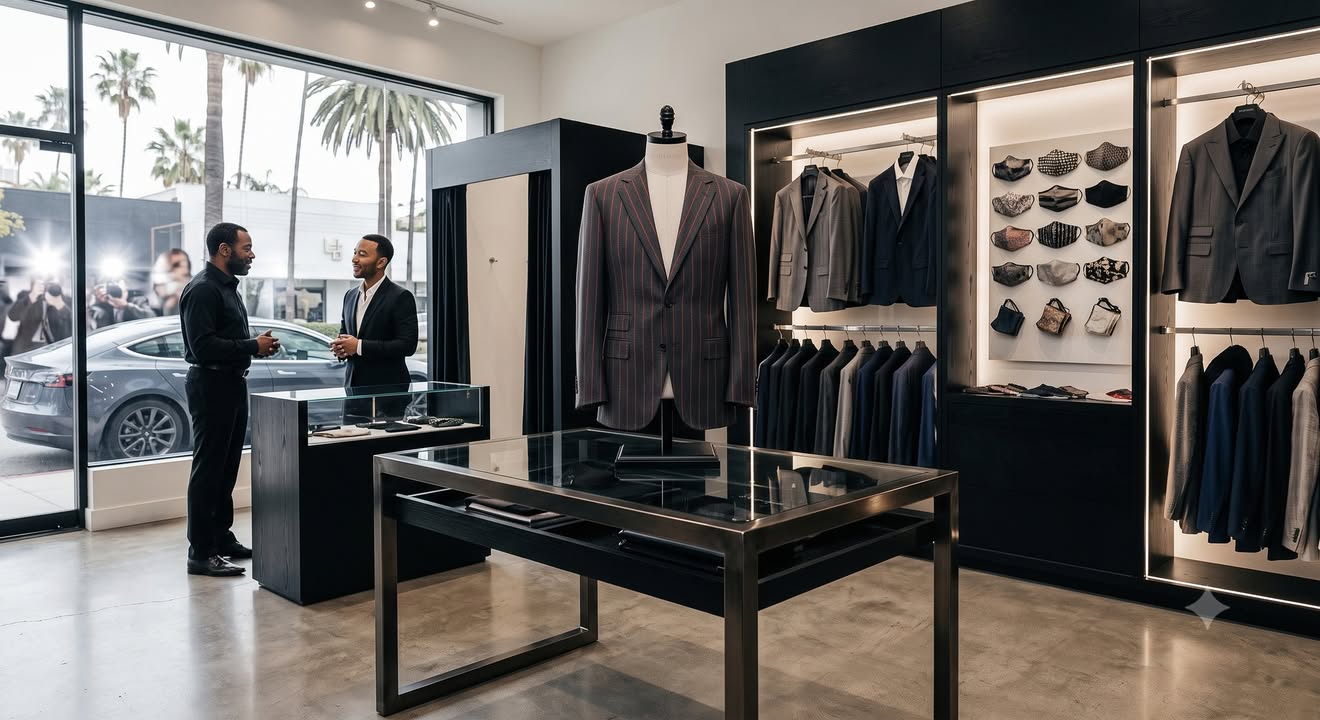
Henry began promoting his designs through social media and reaching out to stylists who worked with celebrities. His colorful custom suits, distinctive stripes and carefully tailored clothing helped his work stand out.
Orders began coming in, and Richfresh grew beyond the small tailoring operation he had struggled to keep running. Henry says his business generated its first $1 million in sales during 2018, the same year he had walked out of a shelter with just $300.
His client list eventually included John Legend, Justin Bieber, The Weeknd, Draymond Green and other well-known entertainers and athletes. His designs also expanded beyond traditional suits into colorful tracksuits and other custom clothing.
When the COVID-19 pandemic disrupted the luxury clothing business in 2020, Henry and his brother, Chase Morgan, launched HENRY Mask. They used their manufacturing resources to produce distinctive folded masks and donate masks to medical workers and families in need.
The Factory He Once Needed Became His
By then, Henry had more than a clothing brand. He had his own manufacturing operation, allowing him to produce both luxury clothing and the new masks.
That had happened back in January 2019, approximately one year after he walked out of the homeless shelter with $300. Henry bought the factory known as Danil Custom Tailor in Los Angeles.
It was the very same factory an Uber driver had spent 45 minutes helping him find.