Against the Odds
He Left a Poor Farm With Almost Nothing — and Built Hyundai
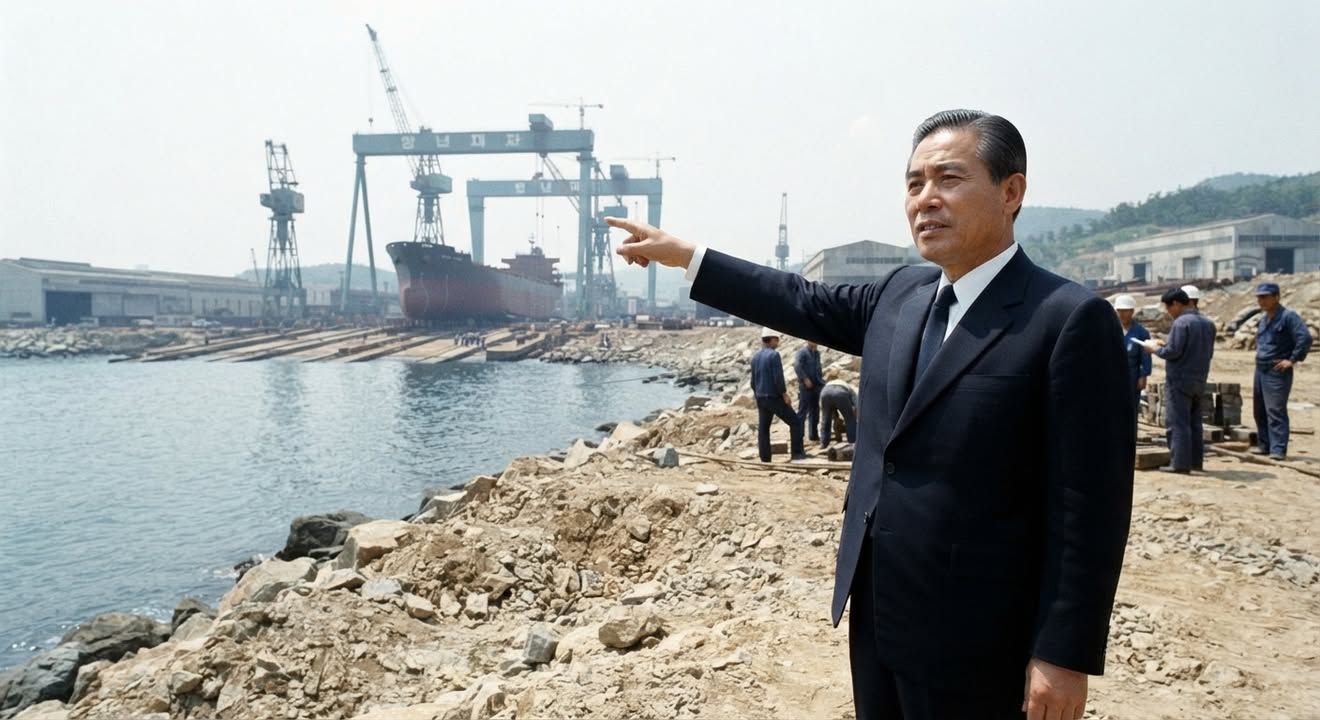
Chung Ju-yung grew up on a poor farm in Korea, where his family expected him to spend his life working the land. But even as a teenager, Chung dreamed of leaving home and finding something better.
He tried running away more than once. His father kept bringing him back, determined that his eldest son would eventually take over the family farm.
Chung had other plans. And one of his attempts to escape involved selling something that belonged to his father.
A Cow and a Train Ticket
Chung was born in 1915 in what is now North Korea. His family had little money, and everyone was expected to contribute to the farm.
As the eldest son, Chung had responsibilities that made leaving especially difficult. But he was fascinated by the possibilities beyond his small village and wanted to earn his own living.
During one attempt to leave, he sold one of his father’s cows and used the money to buy a train ticket to Seoul. He enrolled in a bookkeeping school, hoping to learn the skills needed to build a career. Unfortunately, his father tracked him down and brought him home again.
Chung continued trying to leave until his family eventually accepted that he wasn’t going to spend the rest of his life farming. He began taking whatever jobs he could find, working on construction sites, carrying stones, unloading cargo at docks and delivering rice. The work was exhausting, but Chung was earning his own money and learning how businesses operated.
Eventually, he found an opportunity to run one himself.
His First Businesses Kept Falling Apart
Chung took over a rice shop and worked hard to turn it into a successful business. For a while, things went well. But government restrictions on the rice trade eventually forced the shop to close, leaving him searching for another way to earn a living.
He decided to try something completely different and opened an automobile repair shop in Seoul. Less than a month later, the building burned down.
Chung had invested nearly everything he owned into the business and borrowed money to get it started. After the fire, he had little left.
But he wasn’t ready to give up. He borrowed more money, rebuilt the shop and started again. The repair business recovered and began growing, giving Chung another opportunity to expand his ambitions.
Then Korea was thrown into years of war and political upheaval. In 1947, Chung founded Hyundai Engineering & Construction, a company that would eventually help transform South Korea.
The country needed roads, bridges, buildings and other infrastructure. Chung began taking on construction projects, gradually building the business into a major contractor.
The Korean War disrupted his operations and destroyed some of what he’d built. Once again, he had to start over, this time working from Busan.
From Building Roads to Building Cars
As Hyundai’s construction business expanded, Chung began thinking about transportation. South Korea was rebuilding its infrastructure, and modern roads would eventually need modern vehicles. In 1967, he founded Hyundai Motor Company.
At the time, South Korea had little experience manufacturing automobiles on a large scale. The industry was dominated by established companies in Japan, Europe and the United States. Chung began working with foreign manufacturers while Hyundai developed its own engineering and production capabilities.
The company eventually introduced the Hyundai Pony, widely recognized as South Korea’s first mass-produced domestically developed car. Hyundai continued expanding, introducing new models and eventually selling vehicles in international markets.
But Chung was already working on another enormous project. He wanted South Korea to become a major shipbuilding nation.
Selling Ships Before He Had a Shipyard
In the early 1970s, Chung began pursuing plans for a huge shipyard at Ulsan, on South Korea’s southeastern coast. There was one serious problem. Hyundai didn’t have the modern shipyard, financing or experience needed to build the enormous vessels Chung wanted to manufacture.
He traveled overseas looking for financial backing and technical partners, but convincing foreign investors wasn’t easy. Why would anyone finance a company that wanted to build giant ships when it hadn’t even built the shipyard?
According to Hyundai’s historical account, Chung came up with an unusual argument while seeking support in Britain. He showed potential financiers a Korean 500-won banknote featuring Admiral Yi Sun-sin’s famous turtle ship, a warship developed centuries earlier.
Chung used the image to argue that Koreans had a long history of building advanced ships, even if they didn’t yet have the modern facilities he was proposing. He also showed investors photographs of the coastline where he planned to construct the shipyard.
Eventually, Hyundai secured financing and technical cooperation. Chung then made another surprising decision.
Instead of finishing the shipyard before beginning production, Hyundai started building its first ships while the shipyard itself was still under construction. Both projects moved forward at the same time.
The gamble worked. Hyundai’s shipbuilding operation expanded into one of the major businesses that helped turn South Korea into a global leader in the industry.
The Farmer’s Son Who Built an Empire
Over the following decades, Hyundai became one of South Korea’s largest industrial groups, with businesses involved in automobiles, construction, shipbuilding and numerous other industries. Chung had gone from carrying stones and delivering rice to building companies that employed thousands of people and operated around the world.
But even after becoming one of South Korea’s most successful businessmen, he hadn’t forgotten the farm where he grew up. Late in his life, Chung arranged for 1,001 cattle to be sent across the border into North Korea, where he had been born.
The remarkable shipment became a public gesture of goodwill between North and South Korea, countries that had been divided for decades. But there was also a deeply personal reason for the unusual number.
One cow was repayment for the animal he’d sold to buy his train ticket as a teenager.
The other 1,000 were his gift.