Acts of Kindness
Kansas Prisoners Raised $4,267 to Help Pay Down a School’s Lunch Debt
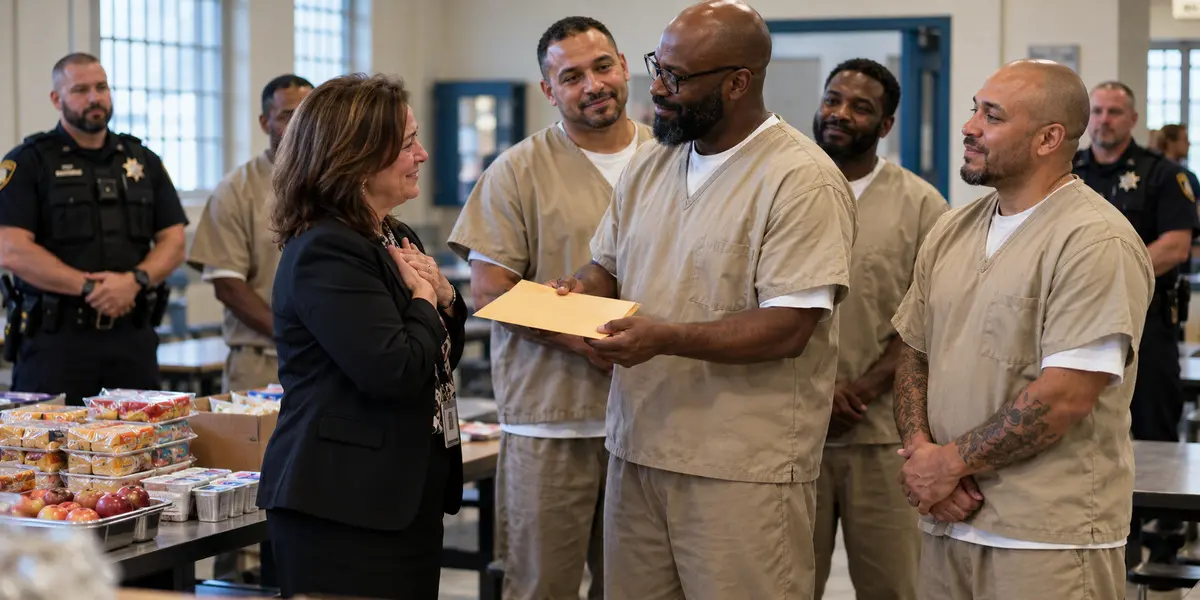
When Corey Roy visited a prison in Norton, Kansas, nearly 30 incarcerated men were waiting to present him with a donation. Roy was the superintendent of the local school district, and the men had heard that some families were struggling to pay for their children’s meals.
They’d spent months collecting money to help. By the time Roy arrived, they’d raised $3,810 from their own funds, and prison employees had contributed another $457.
Together, they were giving Norton Community Schools $4,267 to help cover unpaid school lunches and breakfasts. But during the visit, Roy discovered there was a personal reason some of the men had wanted to help.
The School District Had $6,000 in Unpaid Meals
At the end of the 2025–26 school year, Norton Community Schools was carrying roughly $6,000 in unpaid student meal balances. The money was owed for breakfasts and lunches that had already been served. Some families were struggling financially and couldn’t always afford to keep their children’s cafeteria accounts paid up.
The district had continued serving students their regular meals even when their accounts went into the negative. Children weren’t being handed a different lunch or singled out in front of their classmates because their parents couldn’t pay.
That decision meant the school system was left covering thousands of dollars in unpaid balances. The situation eventually came to the attention of men at Norton Correctional Facility, a state prison in northwest Kansas. Many were participating in a rehabilitation program called Reaching Out From Within.
When they heard about the lunch debt, they decided to do something about it themselves.
The Idea Started Inside a Prison Rehabilitation Group
Reaching Out From Within, often shortened to ROFW, was established in Kansas in 1982. It began as a program led by incarcerated people who wanted to work on changing their behavior and building better lives.
Its members meet regularly to talk about issues such as anger, violence, communication, addiction, and personal responsibility. The discussions follow a curriculum known as the Blue Book, with participants helping one another examine decisions they’ve made and how they want to live differently.
The program also encourages members to do something useful for the communities around them, even while they’re serving prison sentences. At Norton, program manager Tom Brown brought up the school district’s unpaid meal balances during discussions in the spring of 2026.
The men decided to organize a fundraiser. They didn’t have access to the kind of income most people earn outside prison, but they could contribute money from their personal accounts.
And they began collecting it.
They Raised $3,810 From Their Own Money
Over the following months, members of the group contributed what they could. Some gave money they’d saved, while others donated from the limited funds available to them.
Eventually, their contributions reached $3,810. Employees with the Kansas Department of Corrections heard about the fundraiser and wanted to help as well. Staff members added another $457, bringing the total to $4,267. That was enough to cover roughly 71 percent of the district’s outstanding meal debt.
The donation was particularly welcome because it came entirely from people who had chosen to give. Norton Community Schools hadn’t asked the incarcerated men to raise money, and the fundraiser hadn’t been arranged by the district. They’d learned that local children needed help and had organized the collection on their own.
The Superintendent Visited the Prison
On August 3, 2026, Corey Roy traveled to Norton Correctional Facility to receive the donation. Nearly 30 men gathered for the presentation. They had spent months collecting the money, and now they were able to meet the person who would make sure it reached the local school district.
Roy thanked the group and spent time speaking with the men, both together and individually. He wanted to understand what had prompted them to take on the fundraiser.
During those conversations, he learned that several had experienced food insecurity when they were children. They remembered going to school hungry and how difficult it could be to concentrate when they hadn’t eaten enough.
Those experiences had stayed with them into adulthood. When they heard that children in Norton were facing similar problems, they recognized something from their own childhoods.
Roy later told reporters how much the conversations had affected him. He was grateful for the money, but he was also moved by the desire of the men to do something good for people outside the prison.
They Wanted Children to Have Something They’d Gone Without
After the presentation, Roy spoke publicly about the donation and the people responsible for organizing it. He explained that the men had taken the initiative without being asked. Some had shared their memories of childhood hunger, while others spoke about wanting to make better decisions and contribute something positive to the community.
Roy believed the experience had given them a chance to see that their choices could help other people, even while they remained incarcerated. He also pointed out that the donation was going toward children the men didn’t personally know. They wouldn’t meet the students, watch them eat lunch, or receive individual thank-you letters from the families whose meal balances were being reduced.
The money would simply help cover food already served to children whose families were having a difficult time. For some of the men, that was especially personal. They remembered sitting in classrooms with empty stomachs, and now they had an opportunity to help children who were going through the same thing.
They couldn’t change what their own childhoods had been like.
But they could help make another child’s school day a little easier.