Acts of Kindness
A Little Boy Asked Her, “Will You Save My Life?” So She Built a Charity
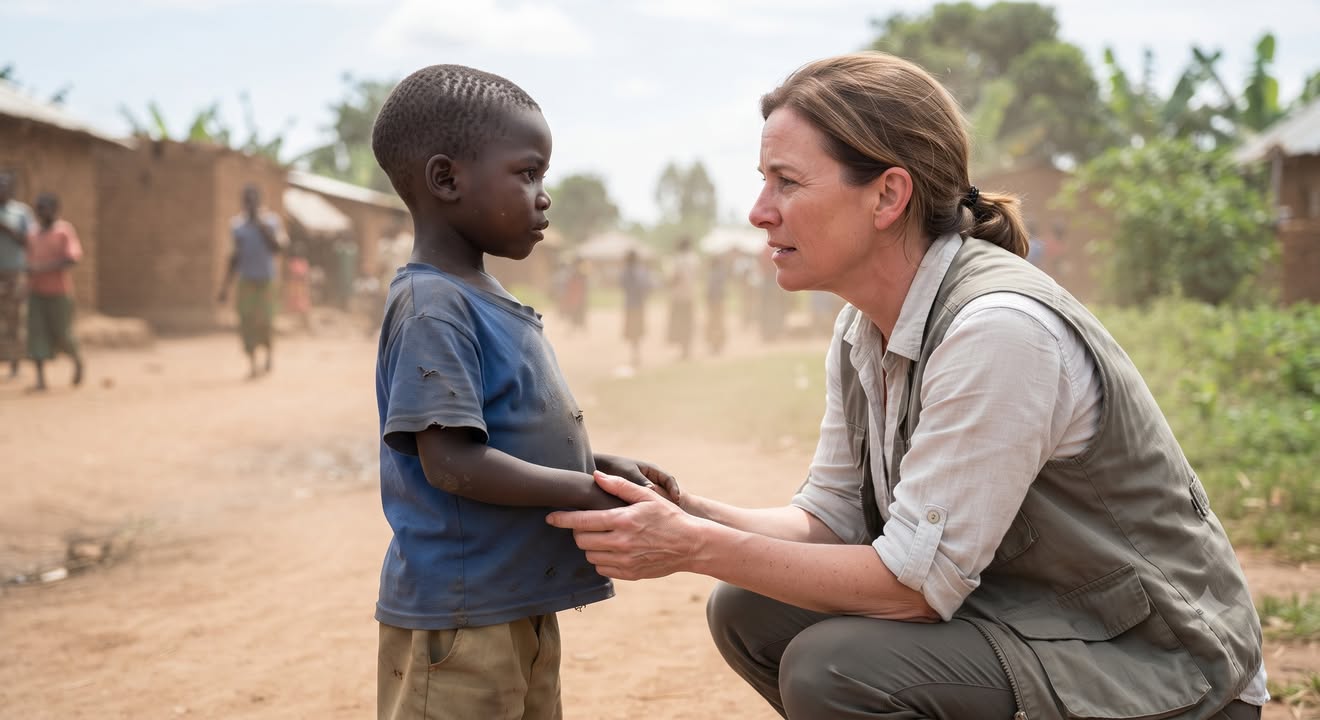
Catherine Mulvale was visiting Kampala, Uganda, in 2006 when a little boy approached her. He was 12 years old, wearing a blue shirt, and he had a question that would change the direction of her life.
“Will you save my life?” he asked.
Mulvale had come from Canada, where many of the opportunities this boy needed were much easier to find. She couldn’t forget his question, and when she returned home, she began thinking about how she could help children growing up in similar circumstances.
What started with that one encounter eventually became Global Friends Foundation, a Canadian charity that would go on to help thousands of vulnerable young people in East Africa.
A Question That Followed Her Home
Mulvale had seen how difficult life could be for children growing up in poverty. Some struggled to stay in school, while others had little opportunity to learn the skills they would need to support themselves as adults.
She began looking at ways to help. Education seemed like an obvious place to start, but simply paying school fees wouldn’t solve every problem. Some young people needed vocational training, while entire communities lacked the facilities required to give children a decent start.
Her early efforts began in 2006, the same year she met the boy in Kampala. She started working toward a program that could give young people more opportunities while helping them eventually become financially independent.
It would take several years to turn those efforts into a formal organization, but the work had already begun.
Building a Charity That Helped Children Build Their Own Futures
On June 17, 2013, Global Friends Foundation was federally incorporated in Canada. Its programs focused on orphaned and vulnerable young people in Uganda and Tanzania, particularly those who needed help continuing their education or learning a trade.
Scholarships became an important part of the foundation’s work. Students who showed ability and a commitment to their education could receive financial assistance to continue studying. Local people familiar with the students, along with their schools, helped assess applications.
For young people who wanted to learn a trade, the foundation also supported vocational training. Programs included tailoring, hairdressing, agriculture, food preparation and construction skills.
Those were practical skills someone could use to find employment or start a small business. A young person who learned tailoring, for example, could earn money making and repairing clothes long after the training program ended.
The foundation also supported community infrastructure projects, helping provide facilities that schools and local programs needed to operate. Rather than trying to run every project itself, Global Friends worked with local partners who understood their communities.
Much of the organization was run by volunteers, allowing it to concentrate its resources on the programs and people it supported.
From 36 Children to More Than 10,000
The early work began with support for just 36 children. As the foundation developed partnerships and expanded its programs, that number grew considerably.
By 2020, a profile of Global Friends reported that its work had reached more than 10,000 vulnerable young people. What began as a small effort following one woman’s trip to Uganda had grown into a charity supporting education, job training and community projects across two countries.
The programs served different needs. Some children received help staying in school, while older students could learn skills that opened the door to employment. Community projects provided facilities that could continue serving residents for years.
The foundation’s approach also meant working closely with people already living in the communities it supported. Local partners could identify where help was most needed and remain involved after individual projects were completed.
Global Friends continued supporting scholarships, vocational training and essential facilities in the years that followed. An August 2026 listing in a Toronto-area social-services directory still identified Mulvale as the foundation’s founder and director.
When the Students Became the Helpers
One of the clearest examples of what Global Friends was trying to accomplish came during the COVID-19 pandemic. As communities struggled to obtain protective masks, the foundation helped organize mask production in Africa. Instead of relying entirely on outside suppliers, it turned to people who had already graduated from its vocational training programs.
Those graduates had learned practical skills through the foundation’s earlier work. Now they had an opportunity to put those skills to use during a public-health emergency, producing masks while earning money for their work.
For people who had once needed financial support just to learn a trade, it was a remarkable change.
They were now being paid to make something their own communities urgently needed.