Changing Lives
She Opened Her Backyard to 34 Children. Six Years Later the Special Olympics Began
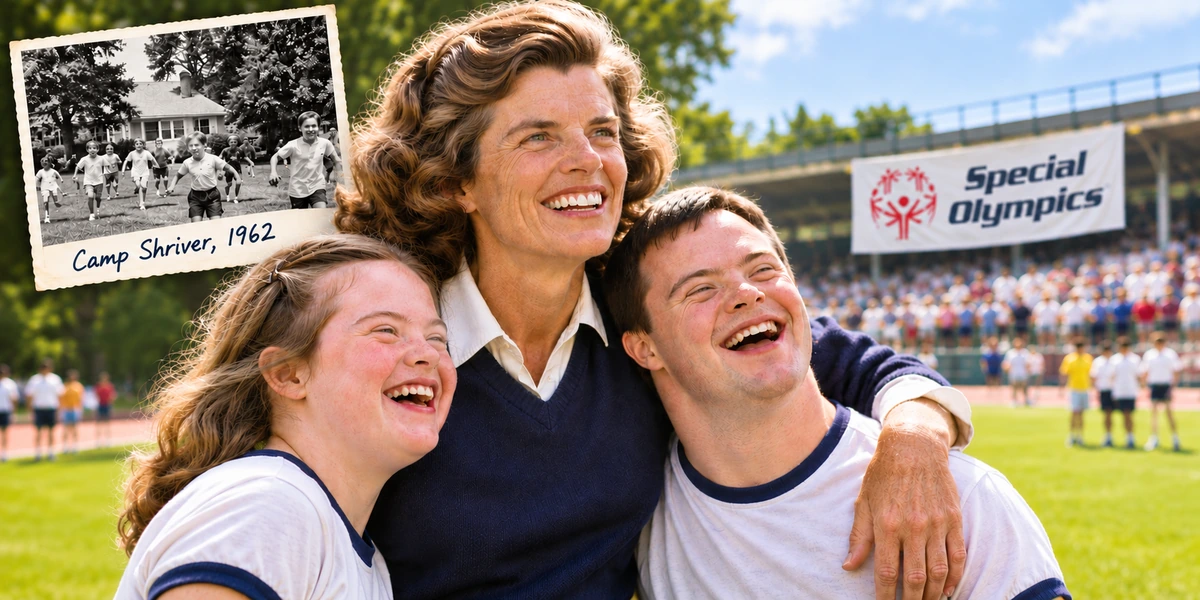
In the summer of 1962, 34 children arrived at a home in Maryland to swim, play games, and enjoy a few weeks of summer camp. There was nothing unusual about the activities, but there was something different about the children attending.
Many had been turned away from other summer camps because they had intellectual disabilities. Eunice Kennedy Shriver thought that was ridiculous, and she had decided to do something about it.
She had a big backyard, a swimming pool, and enough room for children to run around and have fun. If other camps wouldn’t welcome them, she would open one herself.
A Summer Camp With a Difference
Shriver understood the difficulties these families faced. Her younger sister, Rosemary Kennedy, had an intellectual disability, and Eunice had spent years seeing how society treated people who needed extra support.
At the time, children with intellectual disabilities were frequently excluded from ordinary schools, sports teams, and recreational programs. Many parents struggled to find activities where their children would be welcomed, let alone encouraged to compete and develop new skills.
Shriver had heard from families who couldn’t find a suitable summer camp. Rather than organize another meeting or wait for someone else to solve the problem, she decided to use what she already had.
In June 1962, she opened the grounds of Timberlawn, her family’s Maryland estate, for a free summer day camp. Thirty-four children attended, supported by 26 high school and college students who volunteered as counselors.
The children went swimming, played basketball, practiced other sports, and spent time with people their own age. For some of them, it was their first opportunity to enjoy activities that other children took for granted.
Shriver called it Camp Shriver, but she wasn’t interested in simply giving the children somewhere to spend the summer. She wanted them to have the same chances to learn, compete, make friends, and discover what they could accomplish.
The Children Surprised Their Counselors
Many of the young volunteers had little experience working with children who had intellectual disabilities. Some arrived with the same assumptions that were common at the time, expecting the campers to struggle with activities that other children found easy.
It didn’t take long for those expectations to change. Given encouragement and a chance to practice, the children learned games, improved their skills, and showed just how much they enjoyed being part of a team.
Shriver believed that much of the problem wasn’t what these children could or couldn’t do. It was that so few people had bothered to give them a chance.
Her own children joined the activities, playing alongside the campers instead of watching from the sidelines. The friendships that developed were another reminder that the children had far more in common than many adults assumed.
Visitors began coming to Timberlawn to see what Shriver was doing. Teachers, recreation leaders, and people involved in disability services saw a program that could work in their own communities.
With support from the Joseph P. Kennedy Jr. Foundation, similar day camps began appearing elsewhere in the United States. What had started as a local response to a few families’ frustrations was growing into a much wider effort.
From a Backyard to Soldier Field
While Camp Shriver was expanding, other people were also working to make organized sports more accessible. One was Canadian researcher Frank Hayden, whose work showed that children with intellectual disabilities could improve their physical fitness and athletic skills when given proper opportunities.
In Chicago, Anne McGlone Burke and other organizers were developing plans for a major athletic competition. With support from Shriver and the Kennedy Foundation, those efforts helped bring the first International Special Olympics Games to life.
On July 20, 1968, approximately 1,000 athletes gathered at Soldier Field in Chicago. They came from 26 American states and Canada to compete in front of spectators, coaches, families, and volunteers.
It was a long way from the backyard where 34 children had spent a summer swimming and playing games. Now, athletes with disabilities were taking part in a major international sporting event.
The Games included track and field, swimming, and other competitions, with athletes representing their communities and showing what they had learned. Olympic champion Wilma Rudolph was among the well-known athletes who supported the event.
Shriver addressed the competitors with words that became the Special Olympics athlete oath: “Let me win. But if I cannot win, let me be brave in the attempt.”
It captured what she wanted the Games to represent. Winning was worth striving for, but having the courage to participate deserved respect too.
The Camp That Kept Growing
Over the following decades, Special Olympics expanded into multiple countries around the world, offering year-round training and competitions for people with intellectual disabilities.
The organization also grew beyond traditional athletic events. Its programs now include health services, youth activities, and Unified Sports, which bring people with and without disabilities together on the same teams.
By 2025, Special Olympics counted more than five million athletes and Unified partners worldwide. The movement had become something much bigger than a summer camp, with opportunities reaching communities that Shriver could never have served from her own backyard.
Eunice Kennedy Shriver died in 2009, but her work continued through the organization and the people who helped build it. She had spent much of her life challenging the idea that intellectual disabilities should prevent people from participating in everyday activities.
She also understood something that seems obvious now but wasn’t widely accepted in 1962. Children deserved the opportunity to play sports, make friends, and find out what they were good at, regardless of whether they had a disability.
That first summer, Shriver didn’t need a stadium or an international organization to make a difference. She needed a place where children were welcome and enough people willing to help them enjoy it.