
Remarkable Stories
A Black Woman Opened a Bank in Segregated Virginia. Hundreds of Families Got Home Loans
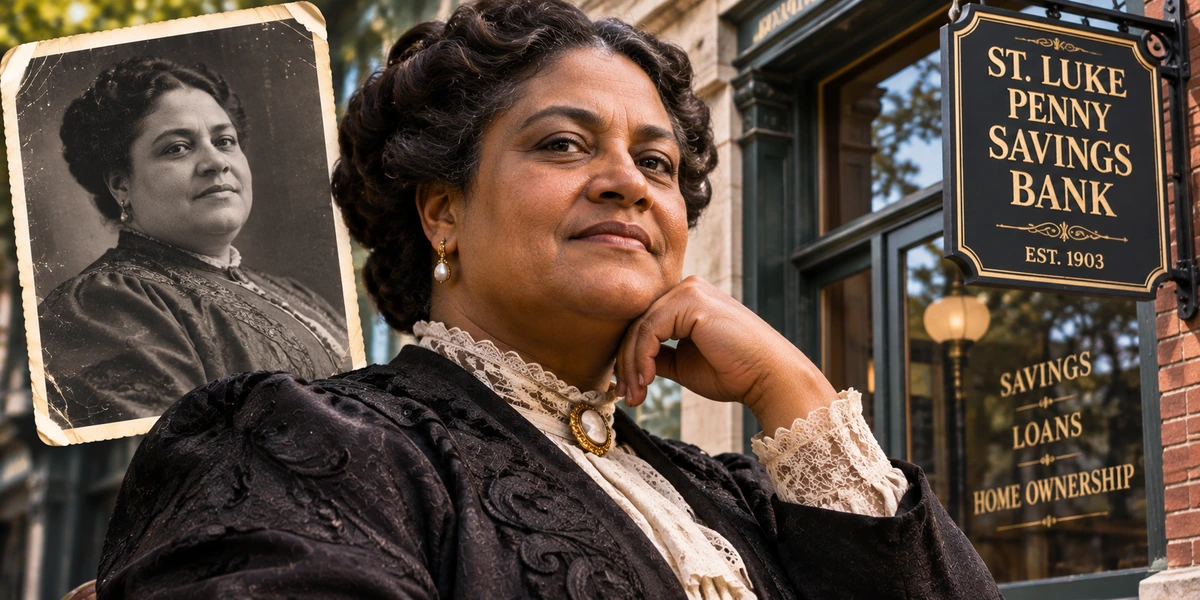
On November 2, 1903, a new bank opened its doors in Richmond, Virginia. Customers made 280 deposits on opening day, and the bank started with more than $9,000 in deposits. The person running it was Maggie Lena Walker, a Black woman in a city where segregation affected nearly every part of daily life.
Women rarely held important jobs in banking, and Black customers often had limited access to financial services. Walker knew those barriers were keeping people in her community from saving money, buying homes, and building businesses. Instead of waiting for established banks to change, she helped start one of her own.
From Laundry Baskets to Business
Maggie was born in Richmond in 1864, during the American Civil War. Her mother, Elizabeth Draper, had been enslaved and later supported her family by taking in laundry. As a girl, Maggie helped collect and deliver the washing, getting an early education in how hard her mother worked to earn a living.
She attended Richmond’s segregated public schools and graduated in 1883. She worked as a teacher for several years and also studied business subjects, including accounting. She was interested in how organizations operated and how they could help people improve their circumstances.
As a teenager, Maggie had joined the Independent Order of St. Luke, an organization that helped Black families with expenses during illness and after a death. Members paid into a shared fund, which provided financial assistance when someone needed it. Maggie became increasingly involved and eventually took on important leadership responsibilities.
By 1899, when she became the organization’s Grand Secretary, its finances were in terrible shape. It had just $31.61 in its treasury, along with roughly $400 in unpaid bills. Keeping the organization running was going to take a lot more than collecting membership dues.
Maggie traveled to recruit new members, strengthened the organization’s financial practices, and worked to make it more useful to the people it served. She also encouraged members to think seriously about saving money and supporting businesses within their own communities. The organization gradually became stronger and expanded its reach beyond Virginia.
In 1902, she launched a newspaper called the St. Luke Herald. It carried news about the organization, encouraged responsible money management, and gave Black businesses a place to reach customers. Maggie understood that people needed information as well as financial services if they were going to build successful businesses.
A Bank for the Community
The following year, she helped establish St. Luke Penny Savings Bank. It was one of several Black-owned banks operating in Richmond, but Maggie became the first Black woman in the United States to establish and serve as president of a bank. She had entered an industry where women were rarely even offered jobs, much less positions of authority.
The new bank encouraged people to save whatever they could, including small amounts that larger institutions might not consider worth pursuing. It also offered loans to customers who had difficulty obtaining credit. Families could begin building savings accounts, while local business owners had another place to turn when they needed financing.
Maggie took the responsibilities of running a bank seriously. She studied banking procedures, learned about accounting requirements, and made sure the institution maintained careful financial records. Her bank passed state examinations at a time when other financial institutions were being closed for poor management.
The business grew quickly, with deposits reaching approximately $170,000 within three years. That money provided a foundation for making loans to individuals and businesses in the surrounding community. By 1920, St. Luke Penny Savings Bank had helped finance more than 600 home loans in Richmond’s predominantly Black Jackson Ward neighborhood.
For families hoping to own homes, access to mortgage financing could make an enormous difference. Home ownership offered greater stability and gave people property they could eventually pass to their children. Maggie wanted the bank to help customers build something lasting rather than simply provide a place to keep their savings.
She Wasn’t Finished Building Businesses
Maggie also believed that creating businesses would provide more employment opportunities for Black residents. In 1905, the Order of St. Luke opened a department store called the St. Luke Emporium, which employed Black men and women. Its display windows featured mannequins with skin tones resembling the people shopping there, something customers rarely saw in other Richmond stores.
The department store eventually closed in 1911, partly because of economic difficulties and competition from established businesses. But the bank continued growing, and Maggie remained closely involved in running it. She had learned that a successful business needed sound finances and customers who trusted it.
Her interests extended well beyond banking, and she supported organizations working for education, public health, and civil rights. She helped establish Richmond’s NAACP chapter and participated in efforts to challenge segregation. After American women gained voting rights in 1920, she also encouraged Black women to register and take part in elections.
Maggie faced personal difficulties while managing all these responsibilities. Her husband died in an accidental shooting in 1915, leaving her to care for their family while continuing to work. Later, her health declined, and by 1928 she was using a wheelchair, but she continued leading the organizations she had helped build.
Keeping the Bank Open
When the Great Depression began in 1929, banks across America were in serious trouble. Customers were worried about losing their savings, and many financial institutions couldn’t survive the economic collapse. Maggie faced the same pressures, with the added responsibility of protecting a bank that served people who already had limited financial options.
She helped arrange a merger between St. Luke Penny Savings Bank and other Black-owned banks in Richmond. The combined institution became Consolidated Bank and Trust Company, with Maggie serving as chairman of the board. It survived the Depression and continued operating for decades after her death.
Maggie died in December 1934 at the age of 70. By then, she had spent more than three decades leading a bank while also supporting businesses, schools, and community organizations. Consolidated Bank and Trust continued operating into the 21st century, long after the woman who helped create it was gone.
Today, Maggie’s former home in Richmond is preserved as a National Historic Site. Visitors can walk through the rooms where she lived and learn about the businesses she helped establish. Her achievements are also remembered throughout Jackson Ward, the neighborhood where she spent much of her life.
A customer walking into St. Luke Penny Savings Bank could begin with just a few pennies. Over time, those small savings might grow into enough money to help support a family or open a business. Maggie wanted people to have a place where they could start.