Remarkable Stories
They Said a Deaf Musician Wouldn’t Fit — She Changed the Rules
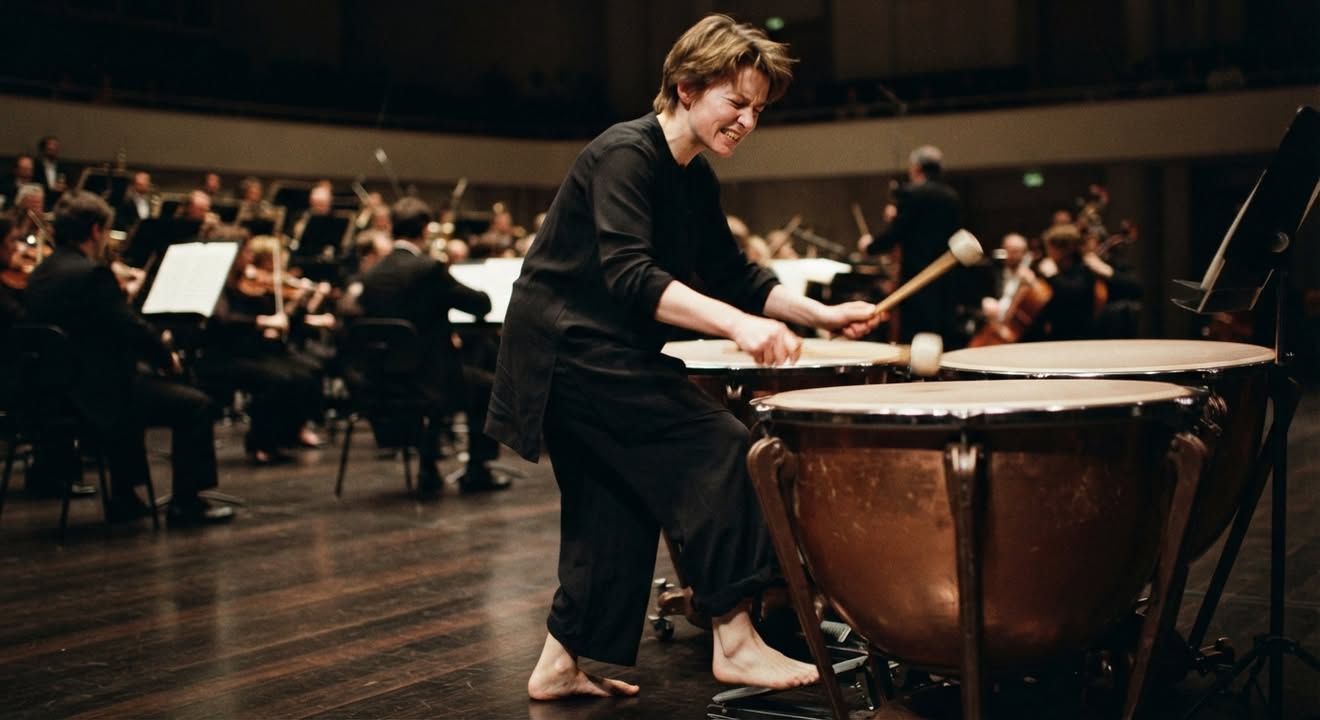
At 16, Evelyn Glennie wanted to study at one of Britain’s most prestigious music schools. She had spent years developing her skills as a percussionist and was ready to audition for the Royal Academy of Music in London.
There was one problem. Glennie was profoundly deaf, and the Academy initially refused to let her audition.
Officials questioned how someone with her hearing loss could ever find professional work in an orchestra. Glennie wasn’t interested in having strangers decide what she could accomplish. She wanted the chance to play her instruments and be judged on her musical ability. Eventually, the Academy agreed to hear her audition.
She Learned to Experience Music Differently
Glennie grew up on a farm in northeast Scotland, where music was part of everyday life. Her father played the accordion, and she began learning piano at eight.
Around that age, her hearing started deteriorating because of nerve damage. By the time she was 12, she was profoundly deaf.
That was also when she became interested in percussion instruments. Drums, marimbas and other instruments produced vibrations she could feel through her hands, feet and body.
Her music teacher, Ron Forbes, encouraged her to explore those sensations. Different notes produced different vibrations, and Glennie gradually learned to recognize them through physical contact and careful attention. She also developed ways to use visual cues, memory and her understanding of how instruments behaved.
Glennie learned that performing music involved much more than hearing notes through her ears. She could feel rhythms, recognize changes in vibration and communicate with other musicians through her movements and concentration. By her teenage years, she’d decided to make music her career.
She Challenged the Academy’s Decision
When the Royal Academy initially turned her away, Glennie argued that her disability shouldn’t prevent her from demonstrating what she could do. She wasn’t asking for an easier audition. She wanted the same opportunity as other applicants.
The Academy eventually allowed her to perform, and she earned a place to study percussion and piano. Glennie later said that challenging the original decision helped change the institution’s approach to applicants with disabilities. Rather than rejecting people because of assumptions about their limitations, the Academy began placing greater emphasis on their musical ability.
Getting accepted was a major achievement, but Glennie had another ambition that would prove just as challenging. She wanted to become a professional solo percussionist.
She Created a Career That Barely Existed
Percussionists had traditionally worked as members of orchestras, often positioned behind the main performers. Solo concerts built entirely around percussion were much less common.
Glennie wanted to put instruments such as marimbas, drums and vibraphones at the center of the performance. The problem was that there wasn’t an established full-time career for someone doing exactly that.
So she began building one. She worked with composers to create new music, developed concert programs and encouraged orchestras to feature percussion soloists.
Her performances attracted international attention. She eventually commissioned more than 200 musical works and recorded over 40 albums.
In 1992, Glennie performed the first percussion concerto in the history of the BBC Proms, one of Britain’s most important classical music festivals. The performance took place at London’s Royal Albert Hall, giving audiences an opportunity to experience percussion as the featured instrument in a major orchestral concert.
The World Started Listening
As her career expanded, Glennie performed with major orchestras and musicians around the world. She became a two-time Grammy Award winner and received more than 100 international awards and honors. One of her biggest public performances came during the opening ceremony of the 2012 London Olympic Games, when she led a group of approximately 1,000 drummers.
She often performs barefoot or wearing socks, allowing her to feel vibrations travelling through the stage. It’s one of several techniques she’s developed during decades of musical training.
Glennie also became increasingly interested in helping people understand the difference between hearing and listening. For her, listening involves paying attention with the whole body, not simply receiving sounds through the ears. That philosophy eventually developed into a wider project called Teach the World to Listen.
Her Work Went Beyond the Concert Stage
In 2023, Glennie established the Evelyn Glennie Foundation, an organization focused on encouraging listening, communication and inclusion.
Her work expanded into education, composition, film and television. She also assembled a remarkable collection of more than 3,800 percussion instruments. In 2021, she became Chancellor of Robert Gordon University in Aberdeen, adding another role to a career that had already taken her around the world.
Glennie had gone from being a teenager who couldn’t get an audition to an internationally recognized musician who helped establish solo percussion as a professional career.
And along the way, she gave audiences a whole new reason to pay attention to the instruments at the back of the orchestra.