
Remarkable Stories
His Boss Wouldn’t See Him — So He Opened a Store Next Door
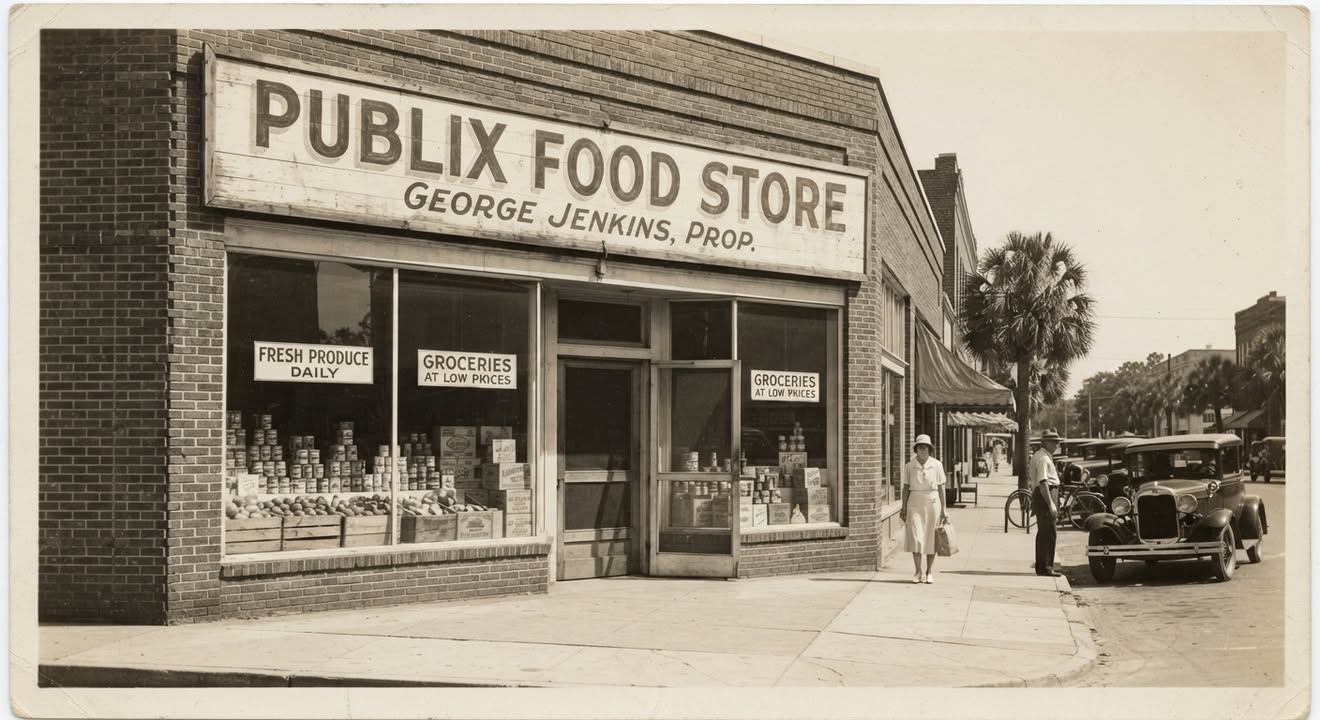
In 1930, 22-year-old George Jenkins walked away from a job that most people his age would have been thrilled to have. He was managing a major Piggly Wiggly grocery store in Winter Haven, Florida, but he was growing frustrated.
Jenkins had ideas about how stores should operate, how employees should be treated and how customers should be welcomed. He felt the company wasn’t interested in listening.
So he quit and decided to open a grocery store of his own. He had no idea that the business he was about to start would eventually become Publix, one of America’s largest supermarket chains.
He Started by Stocking Shelves
Jenkins entered the grocery business in 1925, when he was just 17 years old. He’d moved to Florida hoping to find opportunities during the state’s booming real estate market, but ended up getting a job stocking shelves at Piggly Wiggly in Tampa.
He quickly showed a talent for running a store. Within months, he was promoted to manager, and by 1926, he was running the company’s largest location in Winter Haven.
The experience taught him plenty about customers and employees. He learned that clean stores, good service and small improvements could make shopping easier and more pleasant.
He also began developing his own ideas about management. He believed employees should be encouraged to speak up, suggest improvements and feel respected by the people running the business.
Eventually, Jenkins became convinced that the best way to put those ideas into practice was to start something himself.
Opening a Store During the Great Depression
On September 6, 1930, Jenkins opened the first Publix Food Store in downtown Winter Haven. The timing was hardly ideal. The Great Depression had begun, families were watching every dollar they spent and competition among grocery stores was already fierce.
Jenkins concentrated on creating a place where people enjoyed shopping. He wanted quality products, friendly employees and a clean, welcoming atmosphere.
His approach worked. The business attracted customers, and in 1935, he opened a second Publix store on the other side of town.
With two successful locations, Jenkins could have continued expanding a little at a time. Instead, he started thinking about building something completely different.
He Closed Both Stores to Build His Dream
In 1940, Jenkins made an extraordinary decision. He closed both of his successful grocery stores so he could concentrate on opening the supermarket he’d been imagining. The new Publix Super Market opened on November 8, 1940, and it offered features that were unusual for grocery shopping at the time.
The building had air conditioning, fluorescent lighting, terrazzo floors and automatic doors that opened using an electric eye. Customers could walk into a bright, comfortable store equipped with some of the newest technology available.
Publix later described the building as a food palace made from marble, glass and stucco. Jenkins had created a supermarket designed around making the shopping experience more enjoyable. Customers responded, and the new location became the foundation for the company’s next stage of growth.
The Business Takes Off
In 1945, Jenkins had an opportunity to expand much faster. Lakeland Grocery Company, one of his suppliers, became available for purchase.
He bought the company’s warehouse, office and 19 retail stores. Almost overnight, Publix had a much larger operation and the resources to reach additional communities.
Jenkins gradually replaced many of the smaller grocery stores with larger supermarkets. He also travelled to study other retailers, looking for improvements he could bring back to Florida.
He never treated a successful store as a finished project. There was always another way to make shopping easier, improve operations or serve customers better.
He Wanted Employees to Own Part of the Company
Jenkins believed employees should share in the success of the business they were helping build. He introduced opportunities for Publix workers to become shareholders, giving them a financial stake in the company’s future.
Publix recounts one especially practical example. Jenkins once helped employees purchase company shares by providing a two-dollar weekly raise and setting that money aside toward their stock purchases until the shares were paid for.
He wanted people to feel that Publix was their company, too. That philosophy eventually became one of the supermarket chain’s defining features. Publix is now described as the largest employee-owned company in the United States.
His Office Door Stayed Open
Jenkins never forgot the frustration that had led him to leave Piggly Wiggly. As Publix expanded, he made a point of keeping communication open between employees and management.
He established an open-door policy, encouraging workers to share concerns and suggestions. He also visited stores regularly, speaking directly with employees rather than relying entirely on reports from managers.
Even as Publix became a major supermarket chain, Jenkins continued visiting stores and company facilities. He remained involved until the final week of his life in 1996.
The business kept growing after his death. By 2026, Publix employed more than 260,000 people and operated over 1,400 stores across the southeastern United States.
Its retail sales reached $62.7 billion in 2025.