Remarkable Stories
He Pushed a Shopping Cart on Vancouver’s Streets — Then Pushed One Across Canada
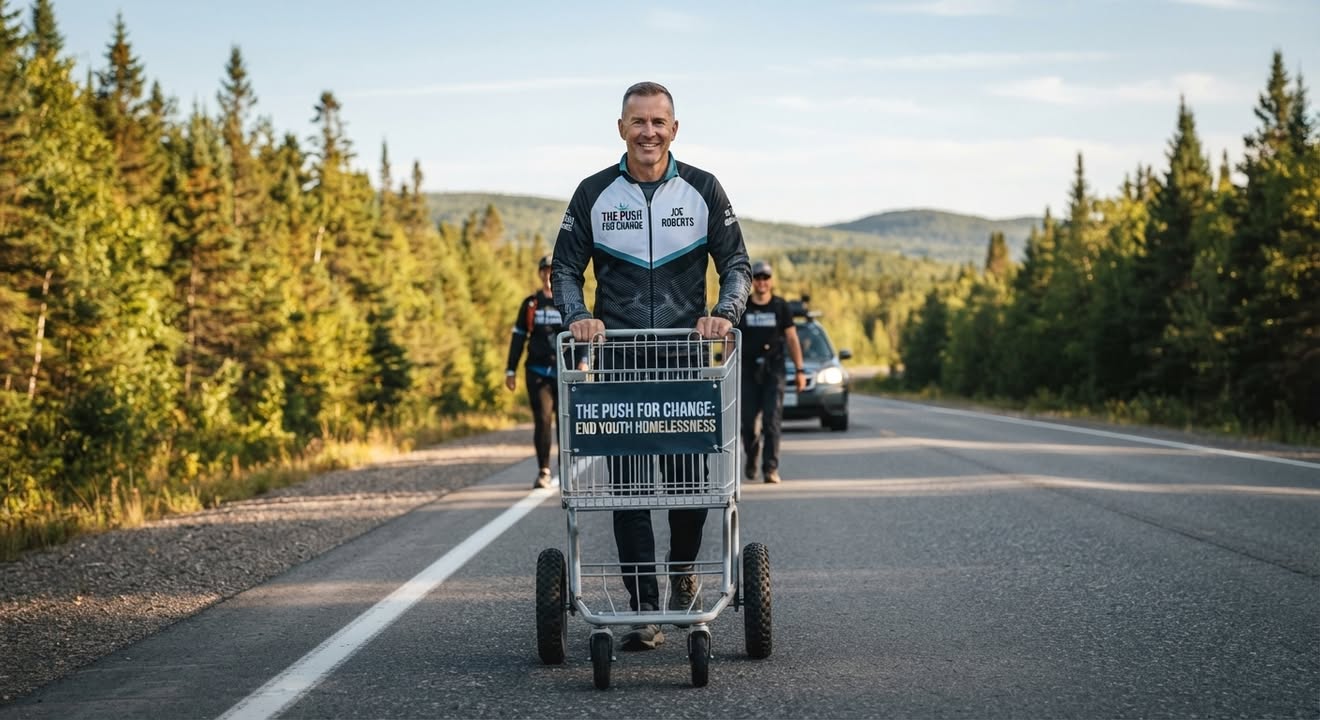
Joe Roberts once pushed a shopping cart through Vancouver while living on the streets. He used it to collect cans and bottles, trying to earn enough to get through another day.
On May 1, 2016, he stood in St. John’s, Newfoundland, with another cart in front of him. This time, he planned to push it all the way across Canada.
The journey would take 17 months. Along the way, Roberts wanted to reach young people before they experienced the homelessness and addiction that had nearly ended his own life.
Someone Saw More in Him
In 1989, Roberts was living on Vancouver’s Downtown Eastside and struggling with addiction. His later success was still years away, and getting through each day consumed much of his attention.
He has often described an encounter with a man named Gus, who sat beside him on a park bench. Gus told him: “There’s more to you than you can see.”
Roberts remembered those words long afterward. They offered a view of him that was different from the one he had come to accept.
Leaving the streets required more help and a great deal of work. His mother helped him return to Ontario, where he entered treatment, later went back to school and began rebuilding his life.
He studied business and marketing at Loyalist College, then developed a career in sales. Eventually, he became the head of a multimedia company and earned a nickname that captured the distance he had traveled: the “Skid Row CEO.”
The Cart Was Part of the Message
Roberts began speaking about his experience, particularly to young people. He also wanted to act on a promise he associated with his hardest years: if he got another chance, he would help others.
A shopping cart gave that promise a visible form. It was an object he knew from his own homelessness, and people seeing him push one down a highway had an immediate reason to ask what he was doing.
He tested the idea in 2012 with a walk from Calgary to Vancouver. The larger national campaign, The Push for Change, followed after years of preparation.
The aim was prevention. Roberts wanted schools, families and communities to recognize when a young person was in trouble and offer support before they lost a stable place to live.
Walking Was Only Part of the Work
The cross-country journey began in Newfoundland and continued west through two summers and a Canadian winter. Some stretches around Lake Superior brought difficult snow and ice.
Roberts walked long daily distances, often around 24 kilometres. But reaching the next town was only one part of the schedule.
The campaign stopped for school presentations and community events, bringing Roberts into rooms with students, teachers, police officers and people working directly with vulnerable youth. He spoke from experience about how badly life could unravel—and about the help that had allowed him to recover.
In Ontario, the provincial police became a formal campaign partner. Local organizations helped arrange events, giving the walk a network of people who could turn a passing visit into an ongoing conversation.
According to the campaign’s final figures, the team held 457 school and community events. More than 200 were school presentations, reaching roughly 100,000 students directly.
The Route Brought Him Back to Vancouver
Roberts completed the journey on September 29, 2017. After 517 days and 9,064 kilometres, he arrived in the city where he had once pushed a cart with nowhere secure to sleep.
The campaign reported raising about $570,000. Sponsors helped cover the costs of the trek, while charitable fundraising supported work addressing homelessness.
The Push for Change continued beyond the walk. Through its Promise Project, it offered resources and grants to help young people develop their own community projects.
Even the cart had involved students. Vancouver high school students helped design the modified version Roberts pushed, using a sturdy baby-stroller base to make it suitable for the journey.
It survived the trip across Canada.
Over more than 9,000 kilometres, it needed only a few replacement wheels.