Remarkable Stories
He Lost an Arm and a Leg at 13 — Two Years Later He Reached the North Pole
In 2002, 13-year-old Jan Mela was playing table tennis with friends in Malbork, Poland, when a rainstorm sent them looking for shelter. Jan entered an electrical transformer building, where he received a devastating 15,000-volt electrical shock.
He survived, but his injuries were so severe that doctors had to amputate his right forearm and part of his left leg. His life changed almost overnight, and he faced months of treatment and rehabilitation.
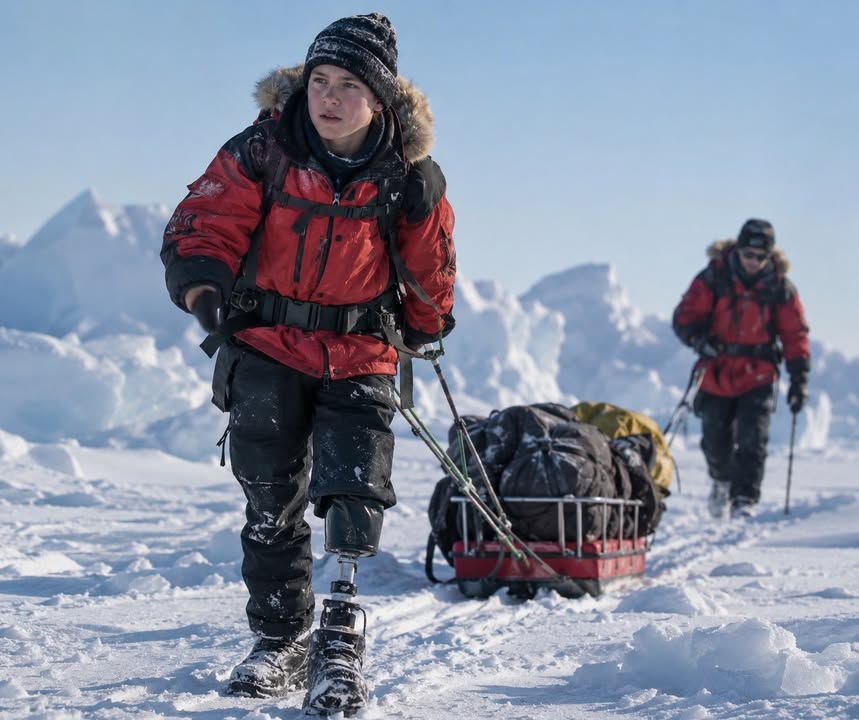
Less than two years later, Jan would be pulling a sled loaded with supplies across the frozen Arctic Ocean, heading toward the North Pole.
Learning to Live With His Injuries
Recovering from the accident was a long process. Jan had to adjust to prosthetic equipment and relearn how to handle everyday tasks that had once been simple. Walking, maintaining his balance and doing things with one hand all required practice.
The accident had also changed what he expected from his future. He had been an active teenager, and suddenly he was dealing with injuries that would affect him for the rest of his life.
His mother wanted to help him find something positive to work toward. She arranged for him to meet Marek Kamiński, a well-known Polish explorer who had completed major expeditions in some of the world’s harshest environments.
The idea was that Kamiński might encourage Jan and help him find the confidence to take on new challenges. But their meeting led to something far more ambitious than anyone had originally planned.
An Invitation to the North Pole
Kamiński began discussing the possibility of taking Jan on a polar expedition. It was an extraordinary opportunity for a teenager who was still recovering from such serious injuries.
Getting to the North Pole on foot meant travelling across moving sea ice, hauling supplies and camping in temperatures far below freezing. Everyone on the expedition would need to be physically prepared and able to look after themselves in dangerous conditions.
Jan began training for the journey. He had to build strength, develop endurance and learn how to handle his prosthetic equipment while moving over snow and ice. Balance was especially important because a fall or equipment problem could become much more serious in extreme cold.
By early 2004, the preparations were complete. Jan joined Kamiński and two other men for an expedition called “Together to the Pole.”
The Journey Across the Arctic
Before starting the expedition, the team spent nine days in Spitsbergen, Norway, getting used to the cold and preparing for the conditions ahead. On April 4, 2004, they began their journey toward the North Pole. The route covered approximately 70 kilometres, and each member of the team had to pull a sled carrying food, camping equipment and other supplies.
The conditions were difficult. Arctic sea ice is constantly moving, creating cracks and uneven surfaces that can make travelling dangerous. Strong winds and freezing temperatures added to the physical demands of pulling heavy equipment across the ice.
Each day involved hours of travelling, followed by the work of setting up camp and protecting their equipment from the cold. The team had to manage its supplies carefully and deal with whatever conditions the Arctic threw at them.
For Jan, the expedition also tested everything he’d learned during rehabilitation. His prosthetics had to function in extreme temperatures, and he needed to maintain his balance while travelling across rough ice with a loaded sled.
On April 24, 2004, after nearly three weeks on the ice, the team reached the North Pole. Jan was just 15 years old. Polish news reports celebrated him as the youngest person to reach the North Pole, an extraordinary achievement for someone who had lost two limbs less than two years earlier.
Eight Months Later, He Did It Again
Most people would have considered reaching the North Pole more than enough adventure for one lifetime. Jan and Kamiński had another destination in mind: Antarctica.
In December 2004, they set out on an expedition toward the South Pole. This time, the journey would cover nearly 200 kilometres through Antarctic snow, wind and freezing temperatures.
The team faced another long trek, hauling supplies and pushing through worsening weather. Jan had already learned a great deal from the Arctic expedition, but Antarctica presented its own challenges.
On December 30, Jan celebrated his 16th birthday while the expedition was nearing its destination. In the early hours of December 31, the team reached the South Pole.
Jan had now travelled to both ends of the Earth in a single year. Polish disability publications reported that he had become the youngest person and the first person with a disability to reach both poles within the same calendar year.
He Wasn’t Finished
After completing the polar expeditions, Jan continued looking for new physical challenges. He later climbed Mount Kilimanjaro in Africa and Mount Elbrus in Russia, two of the world’s best-known mountains. He also took part in the New York City Marathon, adding long-distance running to an already impressive collection of adventures.
As his story became better known, Jan began speaking publicly about his accident, his recovery and the experiences that had followed. He understood the difficulties of adjusting to life after a serious injury, including the importance of having access to proper prosthetic equipment and rehabilitation.
In 2008, he founded the Poza Horyzonty Foundation, which translates to “Beyond the Horizons.”
The organization was created to support people with disabilities, particularly those recovering from life-changing accidents.