
Remarkable Stories
He Cleaned Goldman Sachs Spittoons — Then Ran the Company
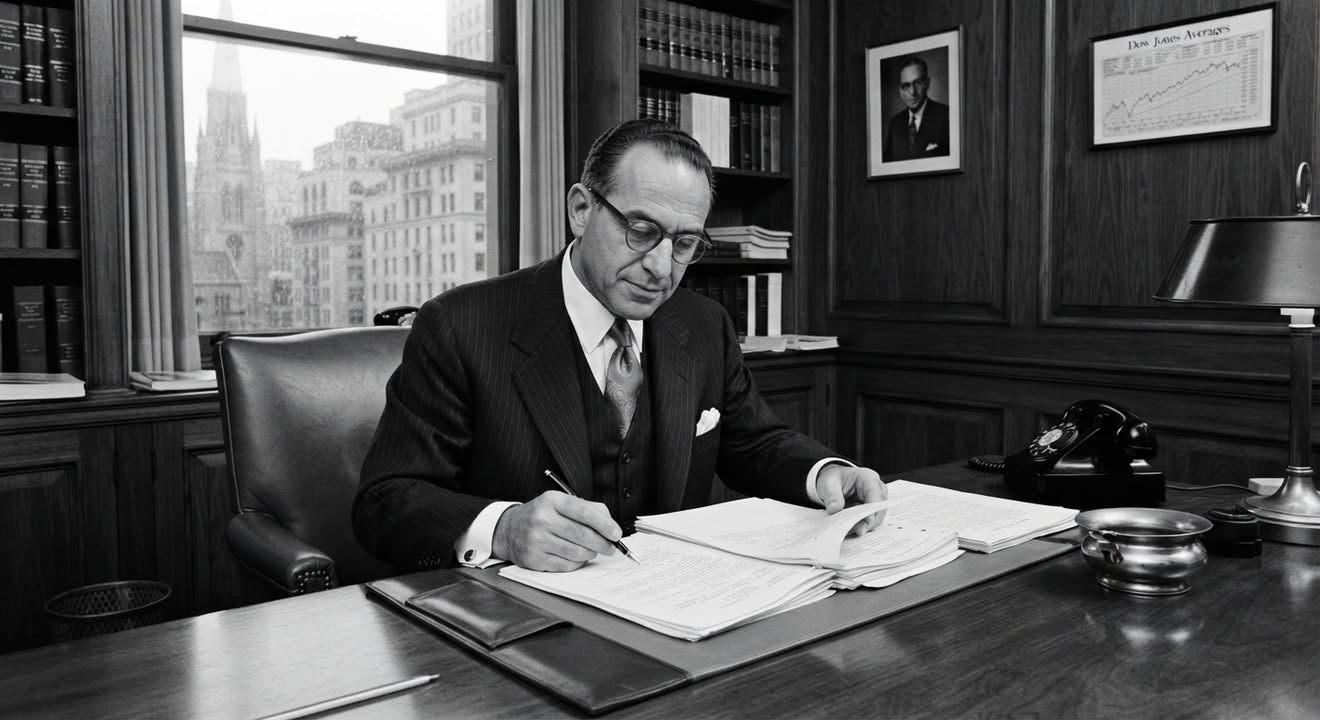
In 1907, a 16-year-old boy named Sidney Weinberg walked into the offices of Goldman Sachs looking for work. He didn’t have a university degree, wealthy relatives or any experience in banking. He was simply a teenager who needed a job.
Goldman Sachs hired him for $5 a week as an assistant to the janitor. His duties included brushing the partners’ hats, cleaning the offices and polishing the brass spittoons that people used for chewing tobacco.
It wasn’t exactly the kind of job that suggested a future on Wall Street. But Weinberg paid attention to everything going on around him, and before long, someone at the firm began paying attention to him.
From the Janitor’s Assistant to the Mailroom
Weinberg grew up in New York and had been working since he was young. Before joining Goldman Sachs, he’d delivered feathers, sold newspapers and carried messages for investment firms. He was used to doing whatever work was available.
After joining Goldman, he eventually moved from cleaning offices into the mailroom. It wasn’t a glamorous promotion, but it gave him a chance to learn more about how the company operated.
He noticed that the mailroom could be organized better, so he came up with a plan to improve the way it worked. His suggestions caught the attention of Paul Sachs, one of the firm’s senior partners.
Sachs was impressed by the teenager’s initiative and began helping him develop his career. He eventually paid for Weinberg to take an investment banking course at New York University, giving him an opportunity to learn a business he had entered through the back door.
Weinberg continued taking on greater responsibilities and building relationships within the firm. In December 1926, Goldman Sachs made him a partner. Less than twenty years after starting as the janitor’s assistant, he had become one of the company’s owners.
Taking Charge at the Worst Possible Time
In 1929, the stock market crashed, sending the American economy into the Great Depression. Goldman Sachs was hit particularly hard after the collapse of its investment company, the Goldman Sachs Trading Corporation.
The firm’s finances and reputation were badly damaged, and its future was uncertain. In 1930, with the company struggling to survive, Weinberg became senior partner.
He faced the enormous job of rebuilding a business that had lost the confidence of many investors. Weinberg concentrated on restoring relationships with corporate clients, developing new business and convincing companies that Goldman Sachs was still a firm they could trust.
He turned out to be exceptionally good at dealing with people. He remembered names, maintained friendships and developed relationships with business leaders that lasted for decades.
Those connections helped Goldman Sachs recover and gradually expand its work advising companies and helping them raise money. Weinberg became one of the best-connected men in American business.
The Man Who Knew Everybody
Over the course of his career, Weinberg served on the boards of 35 companies. They included General Electric, Sears, B.F. Goodrich, National Dairy and Ford Motor Company.
He took those positions seriously. At a time when serving on a corporate board could be little more than a prestigious title, Weinberg believed directors should understand the businesses they were responsible for and take an active role in overseeing them.
In 1949, he gave a speech to the Harvard Business School Club in Cleveland about the responsibilities of corporate directors. He encouraged business leaders to treat board membership as a real job, complete with obligations to the company and its shareholders.
His reputation for giving practical advice made him especially valuable to executives dealing with difficult decisions. One of those executives was Henry Ford II, the young leader of Ford Motor Company.
Helping Ford Make History
In 1947, Weinberg met Henry Ford II, who had taken charge of the family automobile company while still in his twenties. Ford was trying to modernize a business that had been left in serious financial disorder.
Weinberg became a trusted adviser, helping Ford deal with financial questions and corporate decisions. Their relationship would eventually lead to one of the biggest stock offerings Wall Street had ever seen.
In 1956, Ford Motor Company decided to sell shares to the public. Goldman Sachs led the historic offering, which raised approximately $657.9 million through the sale of 10.2 million shares.
At the time, it was the largest common-stock offering ever completed in the United States. The deal brought Goldman Sachs enormous attention and strengthened its reputation as one of the country’s leading investment banking firms.
Weinberg also became one of Ford’s first outside directors. His relationship with the automaker was another example of how far he’d come from the teenager earning $5 a week.
Even the White House Wanted His Advice
Weinberg’s connections extended into Washington. During the Great Depression, he helped establish the Business Advisory and Planning Council in 1933, giving business leaders a way to work with President Franklin D. Roosevelt’s administration.
When the United States entered World War II, Weinberg went to Washington to serve as vice chairman of the War Production Board. The agency helped coordinate American factories and industries as they shifted toward producing equipment and supplies for the war.
Goldman Sachs says Weinberg advised five American presidents during his career. He became such a familiar figure in business and government that people began calling him “Mr. Wall Street.”
Back at Goldman Sachs, he continued leading the firm while preparing younger executives to take on greater responsibility. He supported the creation of a dedicated investment banking marketing operation in 1956 and welcomed a new management committee in 1965.
By then, Weinberg had spent more than half a century at Goldman Sachs. He remained senior partner until his death in 1969, having led the company for nearly four decades.
One Thing Never Left His Office
Despite his success, Weinberg never tried to hide where his career had started. He was proud of having worked his way through the company, and he kept a reminder of those early days close by.
According to Goldman Sachs, Weinberg kept one of the old brass spittoons he’d once polished on display in his office throughout his career.