Against the Odds
A Boy Said He Wanted Food and School — That Answer Became 3 Million Meals a Day
In 2002, Magnus MacFarlane-Barrow was visiting a family in Malawi, where a terrible famine was leaving people struggling to find enough food. The family’s mother was dying from an AIDS-related illness. Sitting beside her was her 14-year-old son, Edward.
MacFarlane-Barrow asked the boy what he wanted most in life. Edward didn’t talk about becoming rich or having a successful career. He wanted enough food to eat and the chance to go to school.
That simple answer gave MacFarlane-Barrow an idea. What if children could receive a nutritious meal every day simply by attending school? It would become the foundation of Mary’s Meals, an organization that now feeds more than three million children every school day.
It Started With a Trip to Bosnia
MacFarlane-Barrow had already spent ten years helping people in difficult circumstances when he met Edward. His humanitarian work began in 1992, when he was working as a fish farmer in western Scotland. After watching television coverage of the war in Bosnia-Herzegovina, he and his brother Fergus decided to collect supplies for people affected by the fighting.
Friends and neighbors donated food, blankets and clothing. The brothers loaded everything into a vehicle and drove to Bosnia to deliver it. They expected it to be a one-time trip, but people back home kept offering more supplies.
Before long, the brothers were making additional journeys, and what had started as a small local collection was turning into something much bigger. The donations were stored in a corrugated shed beside the family’s home in Dalmally, Scotland.
The operation eventually became Scottish International Relief, providing assistance in Bosnia, Romania, Liberia and other countries. By the time MacFarlane-Barrow visited Malawi in 2002, he’d seen firsthand how hunger affected families and how difficult it could be for children to receive an education.
The First School Meals
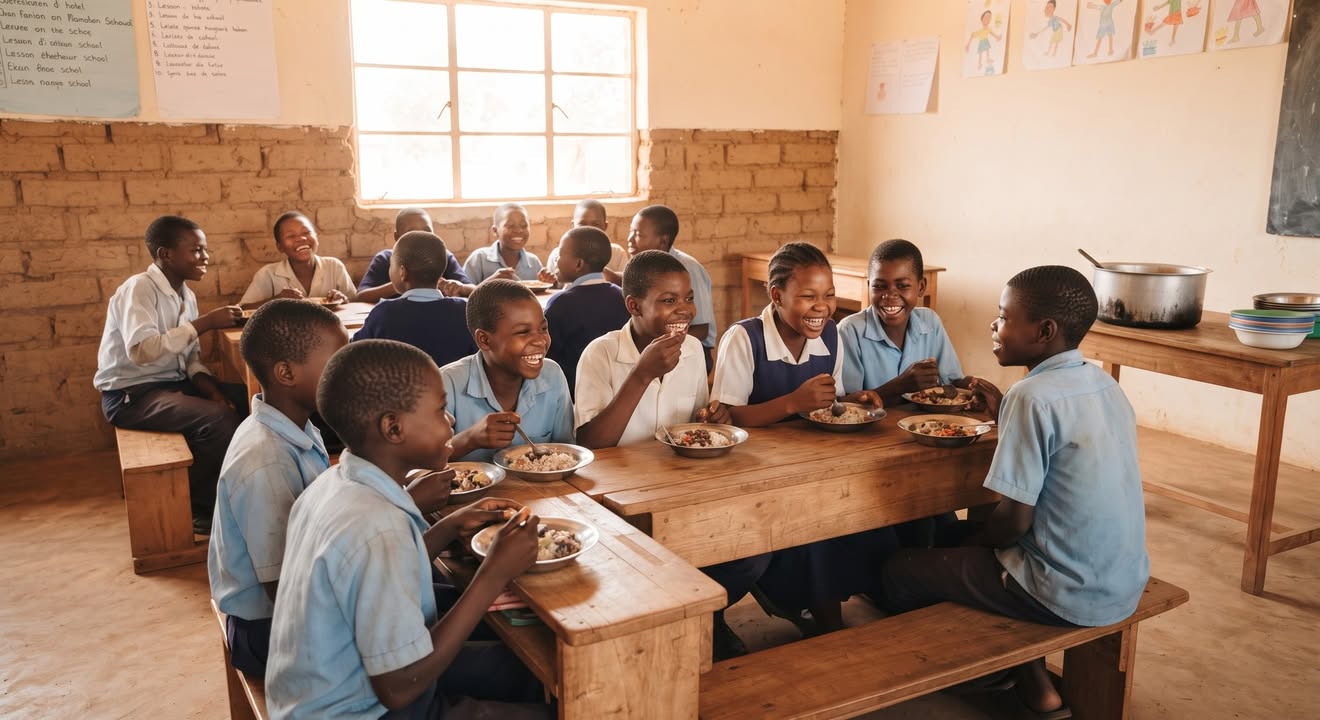
After meeting Edward, MacFarlane-Barrow began developing a program that connected food with education. Mary’s Meals started by providing daily meals to approximately 200 children attending two primary schools in Malawi.
The arrangement was straightforward. Children would come to school, receive a meal and spend the day learning. Parents and local volunteers would help prepare and serve the food.
For families struggling with hunger, a dependable school meal could make an enormous difference. Parents knew their children would be fed, while students had a better chance of concentrating in class instead of sitting through lessons on an empty stomach.
The program began spreading to additional schools as more communities, donors and volunteers became involved.
From 200 Children to Millions
By 2010, Mary’s Meals was feeding approximately 400,000 children every school day. That year, MacFarlane-Barrow was recognized as a CNN Hero for his humanitarian work. Five years later, the charity was approaching one million children receiving daily school meals.
In 2018, Mary’s Meals celebrated another enormous milestone: serving its billionth meal. The organization continued expanding into countries where poverty, conflict and food shortages made it difficult for children to attend school regularly.
Today, Mary’s Meals operates in 18 countries and provides food to more than three million children each school day. Its 2025 Impact Report, released in July 2026, recorded more than 400 million school meals served during that year alone.
And the food isn’t all shipped halfway around the world. The charity reported purchasing more than 28,600 metric tonnes of ingredients locally in 2025, supporting farmers and suppliers in the communities where its programs operate.
Keeping the Cost Surprisingly Low
One of the most impressive parts of Mary’s Meals is how little it costs to provide a child with food for an entire school year. According to the charity, the average annual cost is approximately £19.15 per child.
That’s possible partly because local communities take such an active role in running the programs. Parents and volunteers help with cooking and serving, while schools provide a regular place for meals to be distributed.
Supporters in other countries raise money through donations, community events and fundraising campaigns. The organization can then concentrate on getting food to schools and reaching additional children without building a completely separate system for every community.
The Little Shed Is Still There
Despite everything Mary’s Meals has accomplished, one part of its early history has barely changed. The corrugated shed in Dalmally, Scotland, where the MacFarlane-Barrow family once stored donated blankets and food, remains part of the charity’s headquarters.
Even more remarkably, MacFarlane-Barrow still uses the shed as his office while serving as the organization’s CEO. It is a surprisingly modest workplace for someone leading an international charity that feeds millions of schoolchildren.
But perhaps that’s fitting for an organization that began with a boy asking for two things most children should never have to go without.
A good meal and a chance to learn.