
Changing Lives
The School Bus Driver Who Spent Half His Pay Feeding Hungry Strangers Every Night
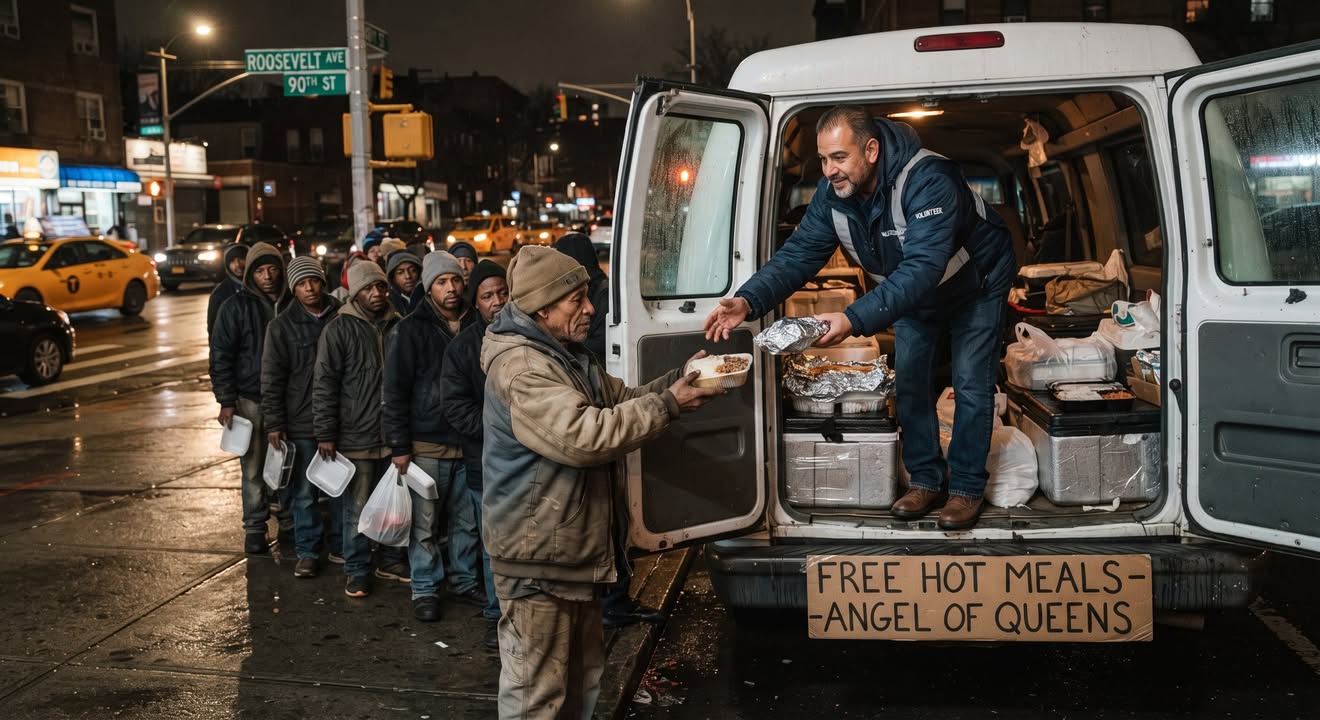
At around 9:30 in the evening, Jorge Muñoz would pull up beneath the elevated train tracks in Jackson Heights, Queens. People were already waiting for his white pickup truck and the home-cooked meals packed inside.
Earlier that day, he had been driving a school bus. After finishing his route, he went home and began cooking for people whose workday had often ended very differently: no job, no wages and no money for dinner.
By 2009, Muñoz was preparing around 130 to 140 meals a day. ABC News reported that he was spending about half of his $650 weekly salary on food and supplies.
It Started With Food Going Into the Garbage
The first meals came from food that would otherwise have been thrown away. During the summer of 2004, Muñoz noticed a food business discarding food while he was waiting in his school bus on Long Island.
He asked whether he could take it and give it to people who needed something to eat. Back in Queens, he knew a corner where day laborers gathered hoping to find work.
Some spent hours waiting without being hired. When nobody offered them a job, they went home without the money they had expected to earn.
Muñoz brought food to eight men that first night. Within a week, the number had grown, and before long the rescued leftovers were no longer enough.
He and his mother began preparing meals themselves. What had started with a small amount of unwanted food became a regular evening commitment.
His Family Kitchen Became Part of the Operation
Muñoz’s mother, Doris Zapata, and his sister, Luz, helped keep the food moving. Cooking, packing and serving enough for a growing line required far more work than one person handing out a few spare portions.
After returning from his bus route in the late afternoon, Muñoz began his second shift. Rice, chicken, vegetables and other simple foods had to be prepared in quantities more familiar to a cafeteria than a household.
In a 2010 CNN interview, he described one night’s supplies: 22 pounds of rice, 15 pounds of pasta, vegetables, onions, peppers and 60 pounds of chicken. The strain showed up in the kitchen equipment. His stove broke twice under the workload, and he used his sister’s stove upstairs to help keep the meals coming.
Donations eventually helped with the expense. His effort became a nonprofit called An Angel in Queens, allowing other people to contribute money, food and time.
The Line Grew as Work Disappeared
The financial crisis brought more people to the corner. As jobs became harder to find, the number waiting for dinner sometimes reached around 150.
Muñoz served people who were homeless, workers who hadn’t earned anything that day and others who simply needed a meal. There was no complicated application standing between a hungry person and the food.
The dependable time and place were part of what made the service useful. People knew where to go, and they knew when the pickup would arrive.
One man told ABC News that he had searched through garbage for food before Muñoz began serving meals. A hot dinner at a familiar corner gave him another option.
By 2009, Muñoz estimated that he had distributed more than 70,000 meals since starting five years earlier. The operation had grown considerably, but it still depended on groceries, a working kitchen and someone willing to make the drive.
Recognition Reached the White House
Muñoz became one of CNN’s Top 10 Heroes in 2009. The following year, President Barack Obama presented him with the Presidential Citizens Medal, honoring the time, money and effort he had given to feeding others.
At the ceremony, Obama described the “Angel of Queens” serving more than 100 people each night, rain or shine. An evening routine that had begun with eight men now had the attention of the White House.
Muñoz had his own way of explaining what he received in return. Speaking about the people he fed, he said: “You have to see their smile. That’s what I get paid.”