Changing Lives
The Gestapo Tortured Her — She Still Wouldn’t Give Up the Children
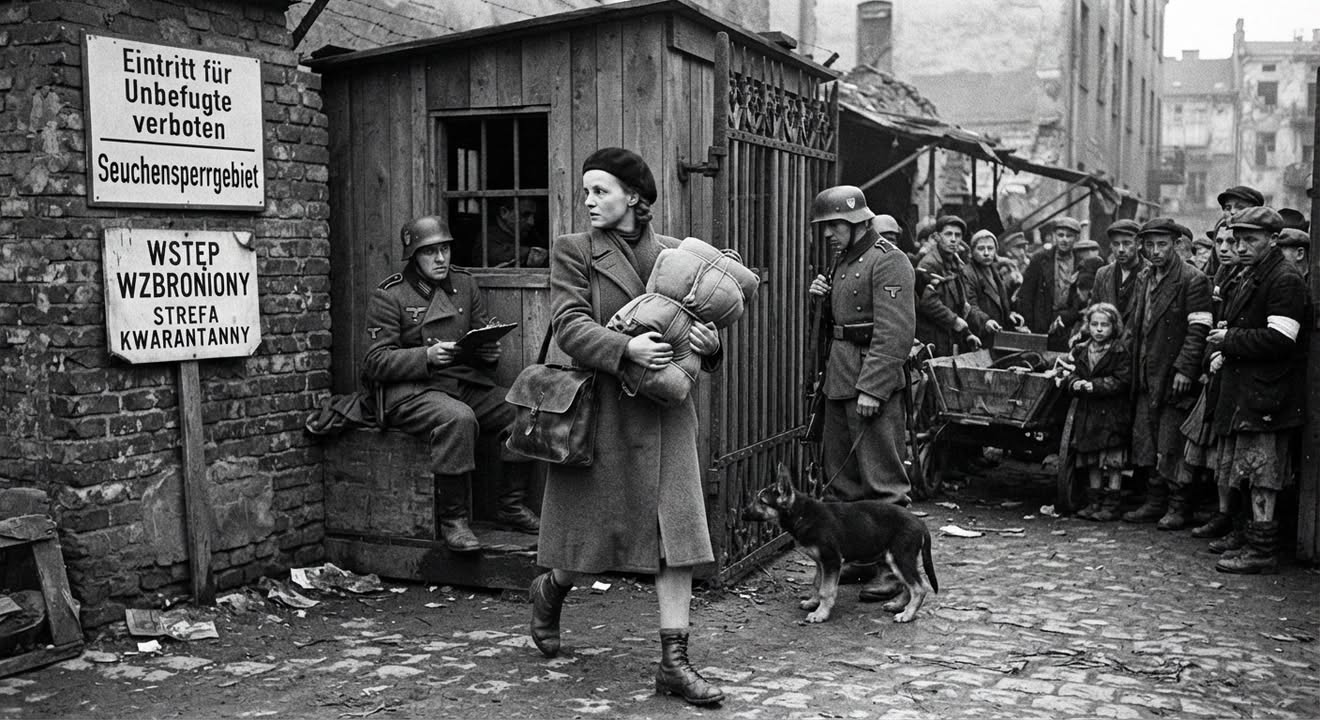
During World War II, Irena Sendler was working as a social worker in Warsaw, Poland, when Nazi Germany forced the city’s Jewish population into a sealed ghetto. Her job gave her access to places most people couldn’t enter. She used that opportunity to bring food, money and medical supplies to Jewish families struggling to survive inside the ghetto.
But as conditions grew worse and more families were deported, Sendler began taking on something far more dangerous. She started helping Jewish children escape.
Getting Children Out of the Ghetto
Sendler joined Żegota, a secret Polish organization dedicated to helping Jews survive Nazi persecution. Its members arranged hiding places, provided money and food, supplied false identification papers and helped people escape from areas under German control.
Working under the name “Jolanta,” Sendler became heavily involved in rescuing children from the Warsaw ghetto. It was heartbreaking work. Parents had to make the agonizing decision to hand their children over to strangers, knowing they might never see them again.
Once a child escaped, the danger was far from over. They needed somewhere safe to live, people willing to protect them and identification papers that wouldn’t reveal their Jewish background. Sendler and her fellow rescuers arranged hiding places in private homes, convents, orphanages, schools and hospitals throughout occupied Poland.
Every placement involved enormous risk. Discovery could mean terrible consequences for the children and anyone helping them.
Keeping Their Real Names Safe
To survive outside the ghetto, many children had to take new names and pretend to be someone else. Sendler understood that this created another problem. Even if the children survived the war, how would their families ever find them again?
She began keeping secret records linking the children’s real names to their new identities and hiding places. According to her later testimony, she wrote information on narrow strips of paper, using codes to help protect the people involved. Her hope was that, when the war ended, surviving parents and relatives could use those records to find their children.
The rescue effort grew into a large network involving families, religious communities, medical workers and other volunteers. Sendler personally helped smuggle several hundred children out of the ghetto while coordinating assistance for many others. Her records contained information connected to roughly 2,500 children helped by the wider network.
Protecting those names became almost as important as getting the children out in the first place.
The Gestapo Came for Her
In the autumn of 1943, Sendler was appointed head of Żegota’s children’s section. Only days later, the Gestapo arrested her.
German authorities knew she was involved in underground activities and wanted information about the rescue network. They interrogated her, brutally beat her and tortured her in an attempt to make her reveal the people she was helping.
Sendler knew the names of children in hiding, the people protecting them and members of the underground organization. She refused to give them up.
The Gestapo continued interrogating her, but she wouldn’t reveal the information they wanted. Eventually, she was sentenced to death and imprisoned at Warsaw’s notorious Pawiak prison.
Her fellow members of Żegota knew they had to act quickly. They arranged a bribe that secured her release before the execution could be carried out.
Sendler had survived an experience that could easily have cost her life. She had also managed to keep the rescue network’s secrets out of German hands.
She Went Straight Back to Helping
After escaping German custody, Sendler assumed another identity and returned to her work with Żegota. She knew exactly what would happen if she was captured again. She had already experienced the beatings, the interrogations and the threat of execution.
Yet she continued helping Jewish families and children. The organization carried on arranging hiding places, providing support and protecting those who had managed to escape Nazi persecution.
Sendler remained involved until the war ended in 1945. By then, the Warsaw ghetto had been destroyed, and countless Jewish families throughout Poland had been murdered. The children who survived faced an entirely different challenge: finding out what had happened to their families.
The Lists She Had Risked Her Life to Protect
After the war, the records Sendler had kept became especially valuable. Many children had spent years living under false names. Some were so young when they went into hiding that they barely remembered their original identities.
The secret lists offered a way to reconnect those children with their past and, where possible, locate surviving relatives. Unfortunately, many parents and other family members had been killed during the Holocaust. The reunions Sendler had hoped for weren’t always possible.
Still, the records preserved names, family connections and information that might otherwise have disappeared. Sendler survived the war and continued living in Poland for decades afterward. In 1965, Yad Vashem recognized her as Righteous Among the Nations, an honor given to non-Jewish people who risked their lives to rescue Jews during the Holocaust.
Her story eventually became known around the world. She died in 2008, more than six decades after the war ended.
Sendler had written down those children’s real names because she hoped their parents would someday come looking for them.
For many of the children, those same records became a way to remember the families they had lost.