Changing Lives
She Took a Gap Year. Then She Built a Home and School for Children in Nepal
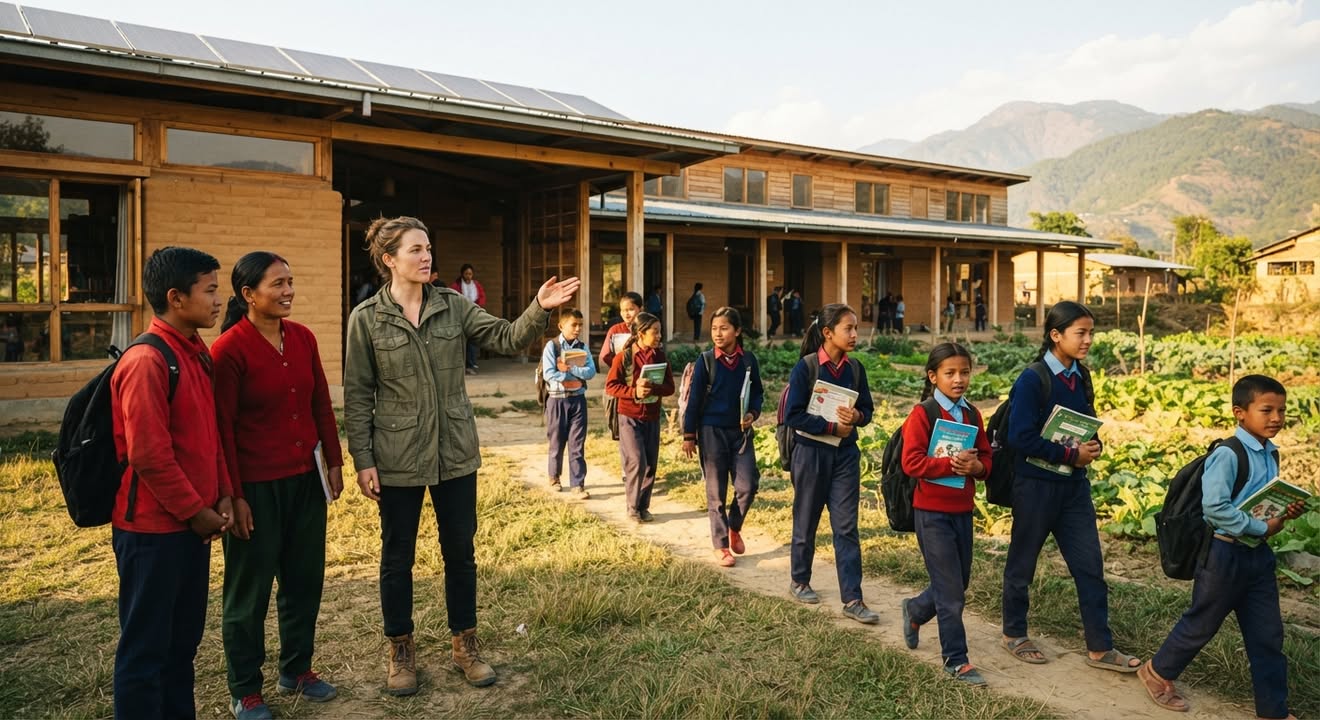
When Maggie Doyne finished high school in New Jersey, she decided to take a year off and travel. She was 18, had about $5,000 saved from babysitting, and wanted to see more of the world before deciding what to do next.
During her travels, she reached Nepal, a country recovering from years of civil war. While visiting Surkhet, she noticed a little girl working in a dry riverbed, breaking rocks to earn money for her family.
The girl’s name was Hima, and she was just seven years old. Doyne decided to pay for her school fees, uniform and books so she could get an education instead of spending her days breaking stones.
It was supposed to be a simple act of kindness during a year of travelling. But meeting Hima would eventually lead Doyne to build a children’s home, a school and an organization that would help thousands of people.
One Child Led to Another
After helping Hima attend school, Doyne began noticing other children who needed the same opportunity. She paid for another child’s education, and then another. Her savings, most of which had come from years of babysitting, suddenly had a much bigger purpose.
As she got to know more families in the community, she realized that some children faced problems that paying school fees couldn’t solve. They needed somewhere safe to live, regular meals and adults who could care for them.
Doyne began working closely with Top Bahadur Malla, a local community leader who shared her desire to help children in Surkhet. Together, they started looking for a way to provide a permanent home for children who needed one.
Doyne used her savings to help buy land, and people in the community joined the effort to build a home. Supporters back in New Jersey and elsewhere also began contributing money.
Construction started in June 2007. Local workers and volunteers helped put the building together, and by 2008, the Kopila Valley Children’s Home had opened its doors.
What began with one little girl’s school fees had become a place where children could grow up with safety, stability and people looking after them.
Building a School of Their Own
With the children’s home operating, Doyne and Malla turned their attention to education. Many families in the surrounding communities struggled to provide their children with good schooling, and they wanted to create something that could help far more children than those living in the home.
That idea led to Kopila Valley School. It would serve children from across the community, giving students access to education along with meals, health care and support when their families needed help.
The school grew steadily. By 2015, when CNN profiled Doyne, about 350 students were attending classes and approximately 50 children were living in the home.
That same year, CNN named Doyne its Hero of the Year. She accepted the recognition alongside Malla and made a point of sharing the credit with the people of Kopila Valley who had helped build and operate the programs.
The organization eventually became known as the BlinkNow Foundation, and its work continued expanding as more families became involved.
More Than Just Classrooms
As the school grew, its team began providing more of the services children needed to succeed. A hungry child could have trouble concentrating in class, and a student dealing with illness might miss days of school. Kopila Valley worked to help families deal with those problems, too.
According to BlinkNow’s 2025 figures, the school serves roughly 14,000 free hot lunches every month. Its wellness clinic also handles more than 2,200 visits a year, giving students and community members access to health services.
The school reported a 97 percent pass rate on Nepal’s grade 10 examinations, showing how far its education program had developed. BlinkNow also began offering training and support for women in the community. Its programs grew to include a women’s center, career preparation, health services and safe housing for girls at risk.
By 2025, more than 1,800 women had received training through the foundation’s programs. Many were learning practical skills that could help them earn income and better support their families.
That work gave parents more opportunities while helping their children enjoy greater stability at home.
Nearly Twenty Years of Growth
What started with a handful of children has grown into a community organization serving families throughout Surkhet. Kopila Valley School now teaches more than 400 students each year, while the children’s home provides a family environment for more than 40 children.
Over the years, nearly 90 children have grown up as part of the home’s extended family. Some of the earliest children have now reached adulthood, finished their education and started making their own way in the world.
BlinkNow created a program called Futures to help young people move into higher education and employment. Its graduates have gone on to attend universities, pursue careers, start businesses and work in their own communities.
Doyne has continued working alongside Malla and local leaders, almost two decades after she first arrived in Nepal. The foundation now supports children and families through programs that extend well beyond the original home and school.
And What Happened to Hima?
The little girl Doyne met breaking rocks in the riverbed never disappeared from the story. In 2015, CNN reported that Hima was thriving, and the changes in her family’s life went well beyond her own education.
Her family was running a small shop.
Her brother was attending Kopila Valley School, and her mother was working at the women’s center.