Remarkable Stories
He Was Headed to Switzerland as a Chef. Then He Saw a Starving Man
In 2002, Narayanan Krishnan was preparing for the biggest opportunity of his cooking career. He had already worked as an award-winning chef at a five-star hotel in India and was being considered for a prestigious position in Switzerland.
At just 21 years old, he had the kind of future many young chefs dream about. But before leaving India, he made a trip home to Madurai to visit his family. During that visit, he saw something that would change his plans completely.
Near a temple, an elderly man was lying by the roadside, desperately hungry and struggling to survive. Krishnan was shocked by his condition. He went to buy food, returned to the man, and helped him eat.
Watching someone who had gone so long without a proper meal affected Krishnan deeply. He had spent years learning how to prepare beautiful food for wealthy hotel guests, yet here was someone in his own hometown who couldn’t get enough food to survive.
Within a week, Krishnan had decided to walk away from his career and return to Madurai permanently.
Cooking for People Who Had Nobody
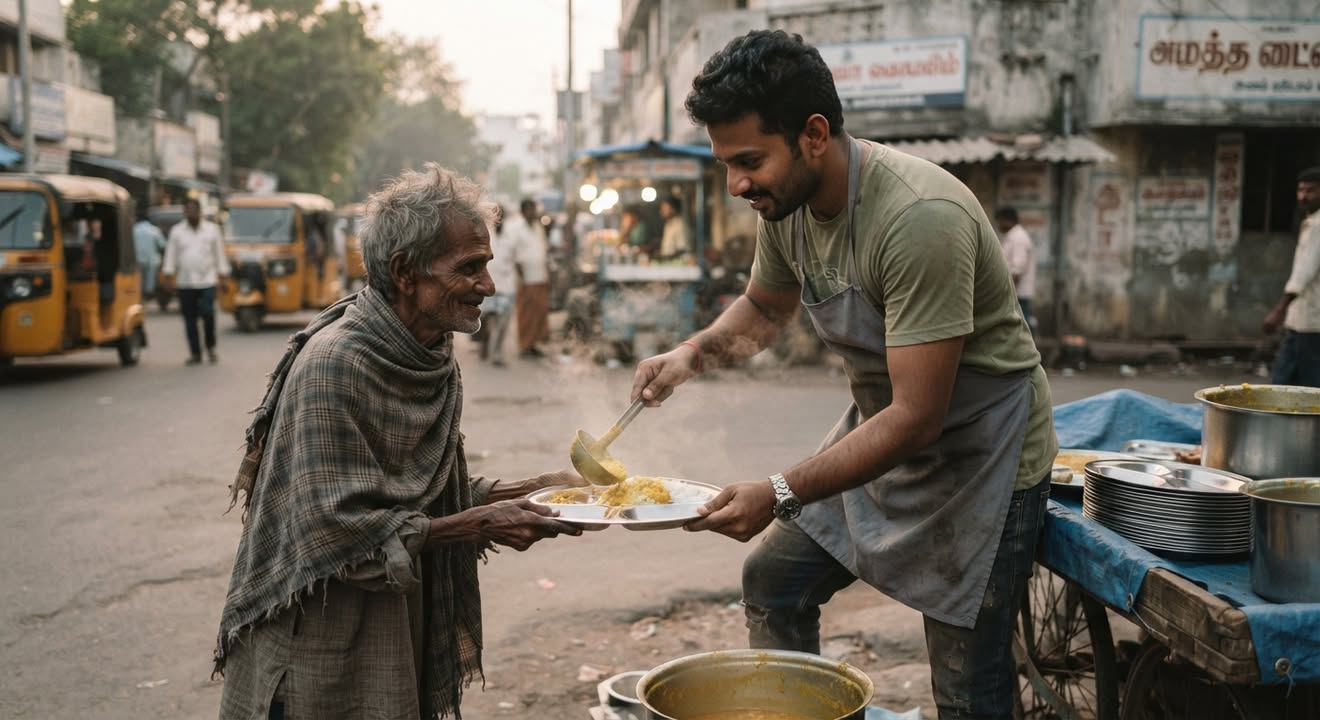
Krishnan began using his personal savings to buy ingredients and prepare meals for people living on the streets. He started in 2002 by feeding approximately 30 people, many of whom were elderly, disabled, or living with mental illness.
He wasn’t collecting restaurant leftovers or handing out whatever food happened to be available. Krishnan cooked fresh meals specifically for the people he visited, preparing the same kinds of nutritious dishes he would have wanted to serve anyone else.
His days started around four in the morning. He would cook breakfast, pack the meals, and head into the streets of Madurai to find the people who were depending on him. Once the food was distributed, he returned to the kitchen and started preparing the next meal.
The routine repeated through breakfast, lunch, and dinner. As more people learned about his work, the number of people he served continued to grow.
By 2010, Krishnan and his small team were feeding nearly 400 people three times a day. According to CNN, he had already provided more than 1.2 million free hot meals.
But Krishnan soon realized that hunger was only one of the problems facing the people he met. Some had been living outside for years, without anyone to help them bathe or maintain basic personal hygiene. Others were sick, injured, or unable to look after themselves.
So he began helping with those things, too. He washed people, cut their hair, shaved their beards, and spent time with those who had been largely ignored by everyone around them. He wanted them to know somebody cared enough to sit beside them and treat them with kindness.
Recognition From Around the World
Krishnan’s work eventually attracted international attention, especially after CNN featured him in its Heroes series in 2010. The television report followed him through his daily routine, showing the early-morning cooking, food deliveries, and personal care he provided to people living on the streets.
Viewers saw him sitting beside people who were too weak or unwell to eat without assistance. They watched him shave men who had gone long periods without proper care, and they saw how comfortably he interacted with people others often avoided.
Krishnan explained that the happiness he saw when people received food and attention gave him the energy to continue. CNN selected him as one of its Top 10 Heroes of 2010, recognizing him alongside nine other people working to improve lives in their communities.
Each honoree received $25,000 to support their work. For Krishnan, the recognition helped introduce Akshaya Trust, the charitable organization he had established in Madurai, to people around the world. The attention also helped bring support for something he had wanted to do for years: provide a permanent home for people who had nowhere safe to live.
More Than a Meal
On May 9, 2013, the Akshaya Home officially opened its doors. For the people Krishnan and his team had been helping, it offered something a roadside meal couldn’t provide. Residents could now receive regular food, shelter, medical attention, assistance with daily activities, and companionship in one place.
The home was built to care for people who were elderly, disabled, mentally ill, or otherwise unable to manage life on their own. Many had been abandoned by their families or had spent years living on the streets.
According to Akshaya’s published figures, the home houses approximately 430 residents between the ages of 20 and 87. Around 80 require additional assistance because of physical or mental health conditions.
Feeding everyone is still a major undertaking. Akshaya estimates that preparing a single meal for about 450 people costs roughly 10,000 Indian rupees. With residents eating three times a day, food alone is a substantial daily expense.
The organization also needs staff, medicine, clothing, utilities, cleaning supplies, and equipment to care for people who may remain there for years. Akshaya still operates a limited street-feeding program, although funding shortages have reduced those visits to one meal twice a week. Much of its ongoing work now centers on providing permanent care for residents at the home.
The Chef Who Never Stopped Cooking
Krishnan’s original career plans might have taken him to an expensive restaurant in Switzerland, preparing elaborate dishes for guests who could afford the finest food. Instead, his cooking became part of a very different operation. The skills he learned in professional kitchens helped him organize meal preparation for hundreds of people, day after day, for more than two decades.
The organization he founded also provides rehabilitation and support for people whose circumstances make it difficult to return to independent living. Some need ongoing medical attention, while others require help with everyday activities most people take for granted.
For residents who have spent years without reliable care, the experience of arriving at Akshaya Home can be overwhelming. Suddenly there are regular meals, clean clothes, a safe bed, and people who know their names. Akshaya describes one small part of welcoming new residents that has become especially meaningful.
When someone is rescued from the streets and brought through the doors of the home, the first thing they hear is a simple word they may not have heard directed at them for a very long time.
“Welcome.”