Remarkable Stories
She Designed a Coat for Homeless People. One Woman Told Her She Needed a Job
Veronika Scott thought she’d come up with a pretty good idea. She had designed a heavy winter coat that could turn into a sleeping bag, giving people living on the streets of Detroit a way to stay warm during freezing nights.
She’d spent months working on the design, visiting shelters and asking people what they thought. But during one of those visits, a woman told her something she hadn’t expected. The coat was useful, but what she really needed was a job.
That conversation changed the direction of Scott’s project and eventually led to a company that would help people find work, earn a steady paycheck and move into stable housing.
It Started as a College Assignment
Scott was studying industrial design at the College for Creative Studies in Detroit when her class was given an assignment: create something that could help people experiencing homelessness. Detroit winters can be brutal, particularly for people who don’t have anywhere warm to sleep. Scott decided to tackle that problem by designing a coat that could also be used as a sleeping bag.
Rather than sitting in a classroom guessing what people needed, she spent time at a local shelter and warming center. She brought in early versions of her design, asked people to try them and listened to their suggestions.
The coat gradually became a heavy, weather-resistant garment that could unfold into a sleeping bag. When it wasn’t being used, it could be packed up and carried over the shoulder. It was designed to provide warmth both during the day and through the night.
Scott continued improving the coat after the class assignment ended. She believed it could make a real difference for people living outside, and the feedback she received helped her make it more practical.
A Woman at the Shelter Had Another Idea
During one of Scott’s visits, a woman challenged her thinking. She appreciated the effort that had gone into the coat, but she told Scott she needed employment more than another piece of clothing.
Scott had been concentrating on helping people survive cold nights. The woman’s comments made her think about how someone might eventually leave the shelter altogether.
A steady job could provide income, help someone afford housing and give them a way to begin rebuilding their life. Scott realized that the people she had been designing coats for might also be the people who could make them.
She began looking for a way to turn her college project into a business that employed people who were homeless or struggling to find stable housing.
The People Who Needed Help Started Making the Coats
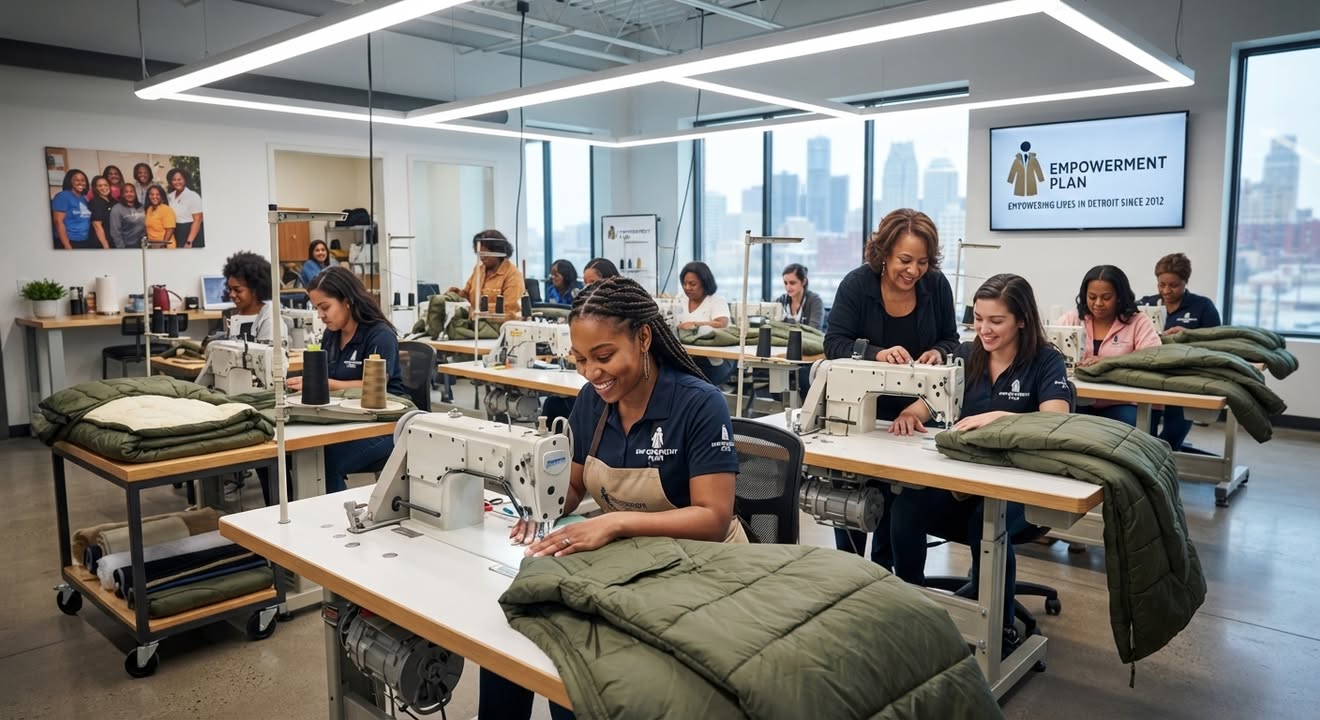
Scott started small. She found space within the shelter system where she’d been developing her designs, arranged sewing instruction and began hiring people to manufacture the coats. The project eventually became Empowerment Plan, a Detroit organization that provides paid employment, training and support to people experiencing homelessness or housing insecurity.
Employees learned how to operate sewing equipment, assemble the coats, inspect finished products and work as part of a manufacturing team. They earned paychecks while developing skills they could use in other jobs.
As the organization grew, Scott and her team learned that employment was only part of what workers needed. Someone living in a shelter might also be dealing with transportation problems, childcare responsibilities, debt or unfinished education. Those challenges could make it difficult to keep a job, even when someone was eager to work.
Empowerment Plan began building additional services into its employment program, giving workers help with the everyday problems that could otherwise get in the way of becoming financially independent.
A Job That Comes With Extra Support
Today, Empowerment Plan operates a program that combines manufacturing work with education and personal support. Employees receive a paid 40-hour workweek, but they don’t spend every hour sewing coats.
According to the organization, about 60 percent of their working time goes toward manufacturing. The remaining time is used for services that can include financial education, counseling, driver training, schooling and career development.
Those opportunities can make an enormous difference. Having a driver’s license can open up more employment options. Learning how to manage money can help someone prepare for rent and other expenses. Additional education can make it easier to qualify for better-paying jobs.
Workers typically spend about two years in the program before moving on to other employment. Empowerment Plan reports that all of its graduates maintain stable housing one year after completing the program. The aim is to give employees the experience and support they need to build a future beyond the organization.
The Coats Started Travelling Around the World
Meanwhile, the coat Scott originally designed as a student continued reaching people who needed it. The current version, known as the EMPWR coat, remains weather-resistant and can be converted into a sleeping bag or a carrying bag.
The coats are distributed through partner organizations rather than sold as ordinary retail clothing. According to Empowerment Plan, they’ve reached all 50 American states, 11 Canadian provinces and territories, and more than 20 other countries.
By 2022, the organization’s Detroit manufacturing team had produced 75,000 coats. Its impact report also recorded 120 people who had moved out of homelessness through employment with Empowerment Plan, along with 360 children whose families had benefited from the work.
The coats are still being distributed in Detroit.