
Remarkable Stories
His Government Told Him to Stop — He Kept Writing Visas Anyway
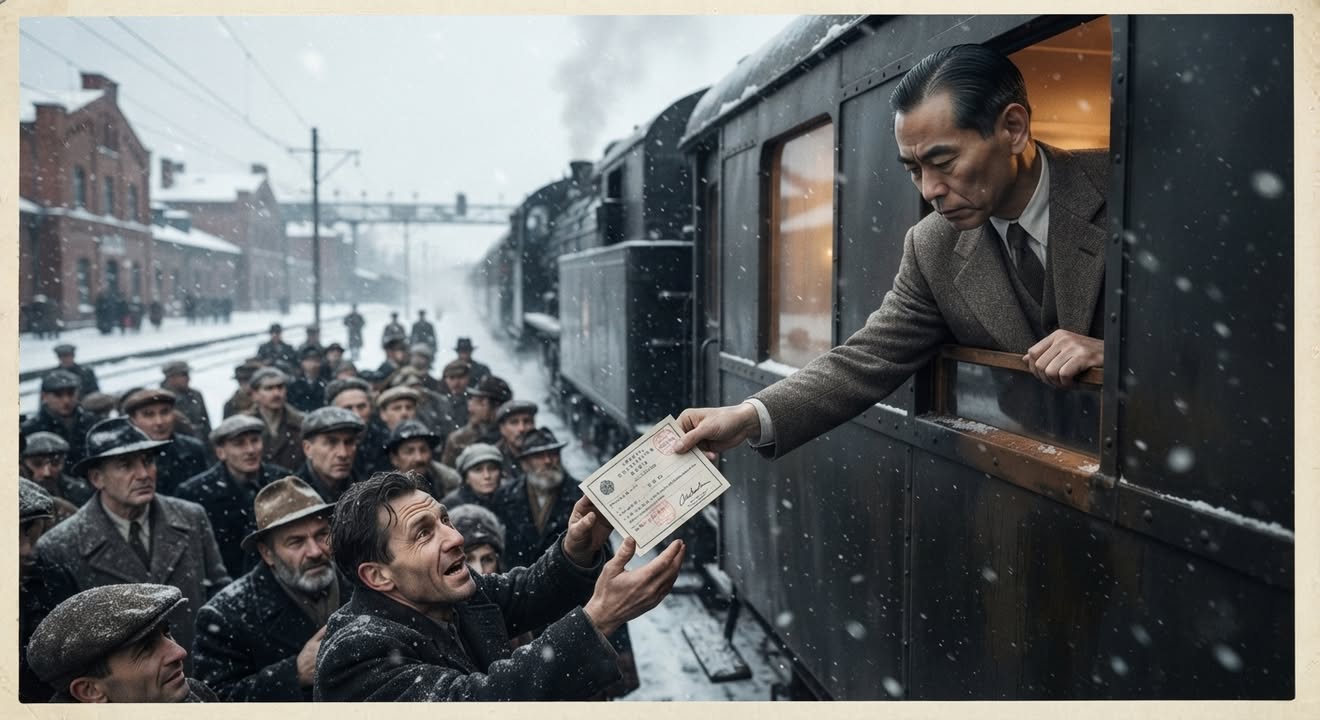
In the summer of 1940, hundreds of Jewish refugees gathered outside the Japanese consulate in Kaunas, Lithuania. Many had already escaped Nazi-occupied Poland, but the war was spreading, and they were running out of places to go.
Inside the consulate was a Japanese diplomat named Chiune Sugihara. The people waiting outside needed his help to escape Europe, and he was one of the few people who could provide it.
There was a serious problem, though. Many of the refugees didn’t meet Japan’s requirements for entering the country, and Sugihara’s government wasn’t willing to make an exception.
Sugihara decided to issue the visas anyway.
An Escape Route Through Japan
By 1940, much of Europe had become extremely dangerous for Jewish families. Germany had invaded Poland, the Soviet Union was taking control of Lithuania, and refugees were desperately searching for a safe route out. One possibility involved traveling across the Soviet Union by train, reaching Japan and continuing to another destination.
Dutch honorary consul Jan Zwartendijk had already begun helping refugees by providing documents connected to Curaçao and other Dutch territories. Those papers gave people a possible destination, but they still needed permission to travel through Japan. That’s where Sugihara came in.
As Japan’s vice-consul in Lithuania, he had the authority to issue transit visas. With the right paperwork, refugees could attempt the long journey across the Soviet Union and onward to Japan.
But Japanese immigration rules required travelers to have proper destination documents and enough money to support themselves. Many of the desperate families outside his office had neither.
Sugihara contacted his superiors in Tokyo, asking for permission to help. The instructions he received made it clear that Japan expected those requirements to be followed.
He Chose to Help Anyway
Sugihara could see what was happening outside his office. Families who had already fled one country were now trapped in another, with fewer opportunities to escape as each day passed. He began issuing ten-day transit visas, including to people who didn’t have all the documents or money normally required.
Tokyo eventually sent another message reminding him of the rules. Sugihara acknowledged that he had been issuing visas outside the usual requirements and explained why he believed it was necessary.
Without those documents, many refugees would struggle to obtain permission to cross the Soviet Union at all. He continued writing.
Each completed visa gave another person or family a chance to leave. The documents weren’t guarantees of safety, but they opened a route that might otherwise have remained closed. And the situation was becoming more urgent.
Thousands of Visas, Very Little Time
Soviet authorities had ordered foreign diplomatic missions in Lithuania to close, meaning Sugihara would soon have to leave the country. The lines outside the consulate continued growing.
Sugihara spent long days preparing visas by hand, working through one application after another. His wife, Yukiko, helped as the family dealt with the growing crowds and the approaching closure.
The work continued as his departure drew closer. Refugees were still desperately trying to obtain the documents that might allow them to escape.
According to the United States Holocaust Memorial Museum, Sugihara issued visas to approximately 2,140 people before leaving Lithuania. Those documents also covered around 300 additional family members, many of them children. By the time he departed in early September 1940, thousands of people had received help from a diplomat who had chosen to put their survival ahead of his government’s normal visa requirements.
A Journey Across an Entire Continent
Getting a Japanese transit visa was only the beginning. Refugees still needed permission to leave Soviet territory, secure train tickets and make the enormous journey east across the Soviet Union.
Many traveled on the Trans-Siberian Railway, eventually reaching Vladivostok on Russia’s Pacific coast. From there, they could continue by ship to Japan.
The journey covered thousands of kilometres and required passing through several countries while much of the world was at war. More than 2,000 Polish Jewish refugees entered Japan through this broader escape route between late 1940 and 1941, according to the United States Holocaust Memorial Museum.
Some eventually reached the United States, Canada and other countries. Many others continued to Shanghai, where they remained during the war. Sugihara’s signature had helped make those journeys possible, even though he would never meet most of the people who used his documents.
Life After Lithuania
After leaving Lithuania, Sugihara continued his diplomatic career in other European countries, including Czechoslovakia and Romania.
Near the end of World War II, Soviet forces detained him and his family. They eventually returned to Japan in 1947. Sugihara left the Foreign Ministry and spent years working in other jobs, including employment connected to a Japanese trading company in Moscow.
There was no immediate national celebration waiting for him when he came home. His work helping Jewish refugees remained relatively unknown to the wider public for decades.
Meanwhile, the people who had escaped using his visas were rebuilding their lives in countries around the world. Some eventually began searching for the Japanese diplomat who had helped them.
Recognition Arrived Decades Later
In 1984, Yad Vashem, Israel’s official Holocaust remembrance center, recognized Chiune Sugihara as Righteous Among the Nations. The honor is given to non-Jewish individuals who risked their safety or position to help rescue Jews during the Holocaust. A ceremony was held in Jerusalem in January 1985, more than four decades after the summer when refugees had gathered outside his consulate in Lithuania.
Sugihara died the following year, in 1986. The transit visas he had issued in 1940 were only valid for ten days.
Yet forty-five years later, people were still gathering to honor the man who had given them a chance to escape.