
Acts of Kindness
He Started With 67 Pieces of Clothing — and Changed How Charity Worked
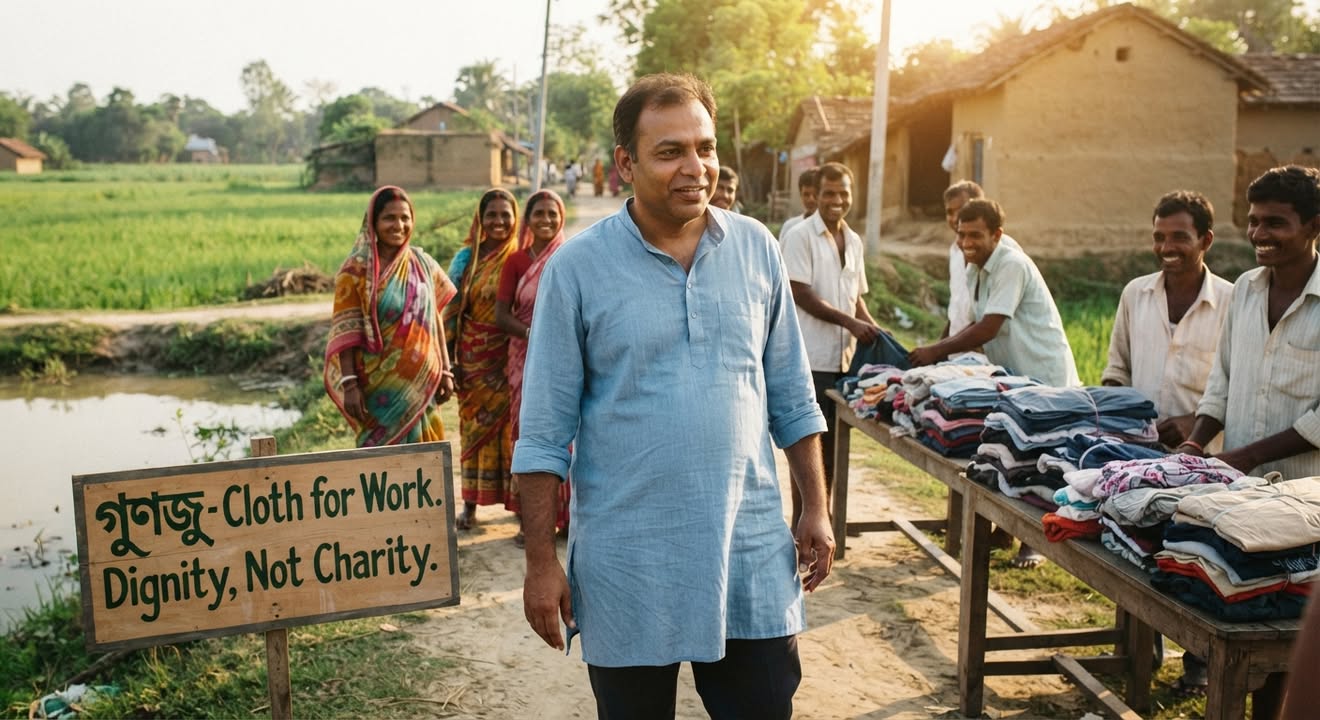
In 1999, Anshu Gupta and his wife, Meenakshi, gathered 67 pieces of clothing from their home in India. They wanted to do something about a problem Gupta had been noticing for years.
In India’s cities, people had cupboards full of clothes they no longer wore. Meanwhile, families in poorer communities often struggled to obtain basic necessities.
Gupta decided to connect the two. He founded an organization called Goonj, starting with that small collection from his own home.
Within a few years, his idea would grow far beyond clothing donations. Entire villages would begin repairing roads, restoring water supplies and building bridges using a system Gupta developed.
Getting the Donations Right
Gupta had previously worked in the corporate world, but he’d become increasingly interested in the everyday problems facing people living in poverty. Clothing was one area he felt wasn’t receiving enough attention. Development organizations often concentrated on food, housing and education, while the need for appropriate clothing received far less consideration.
Goonj began collecting clothes and household goods from urban families. But Gupta quickly discovered that handling donations properly required considerable work.
Everything had to be sorted, checked and sometimes repaired. A winter jacket wouldn’t be useful in an area with year-round heat, and a badly torn shirt wasn’t much help to someone who needed clothing they could wear.
Gupta wanted people receiving donations to get items that were genuinely useful and appropriate for their circumstances. As Goonj’s collection network expanded, he began exploring another possibility. Perhaps the materials could become part of a much larger exchange.
Clothing Became a Way to Get Things Built
Gupta developed a program called Cloth for Work, which gave communities a new way to obtain useful supplies while improving their surroundings. Residents would identify something their village needed. It might be a damaged road, a neglected pond, a broken bridge or a well that needed cleaning.
They would organize the project and carry out the work themselves. Goonj would provide clothing and household materials as part of the reward for their efforts. The approach caught on because communities could tackle problems that might otherwise remain unresolved for years.
A village could repair a road without having to wait for an outside organization to send workers. Residents already knew where the problems were and what needed to be done.
Goonj helped supply the materials that made the arrangement worthwhile. Over time, the projects expanded to include bamboo bridges, restored water sources, improved public spaces and places for children to learn.
Finding New Uses for Old Materials
As donations increased, Goonj began developing creative ways to handle fabric and clothing that couldn’t be distributed as ordinary garments. Workers turned some of the material into quilts, bags and other useful items. They also began producing reusable cloth sanitary pads, helping address menstrual health needs in communities where supplies could be difficult to obtain.
These programs made it possible to use material that might otherwise have been discarded. Goonj also became involved in disaster relief, helping communities recover from floods, earthquakes and other emergencies.
During disasters, enormous quantities of donated goods can arrive in affected areas. Goonj’s experience handling large collections helped it organize supplies and distribute them according to local needs. The organization gradually expanded into school supplies, household essentials and other forms of practical assistance.
The Numbers Became Enormous
What began in one family’s home grew into a nationwide operation. According to Goonj’s impact figures for 2014 through 2024, the organization reached more than 18 million people and handled over 63 million kilograms of material. During those ten years, communities completed more than 96,000 development projects through Cloth for Work, generating over one million person-days of work.
Goonj also reported producing and distributing more than nine million cloth sanitary pads. The organization was now helping people improve roads, water systems, schools and other parts of daily life across India.
International Recognition
In 2015, Gupta received the Ramon Magsaysay Award, one of Asia’s most respected public-service honors. The award recognized his unusual approach to charitable giving and his work connecting donated materials with projects organized by the people who would benefit from them. By then, Goonj had become a well-established organization, with collection centers, sorting operations and partnerships supporting communities throughout India.
Gupta continued developing the programs, finding new ways to use donated material and support work that local residents wanted to carry out.
A shirt that had spent years sitting in someone’s cupboard could now help a village build a bridge.