Remarkable Stories
A Stranger 10,000 Miles Away Was His Only Match
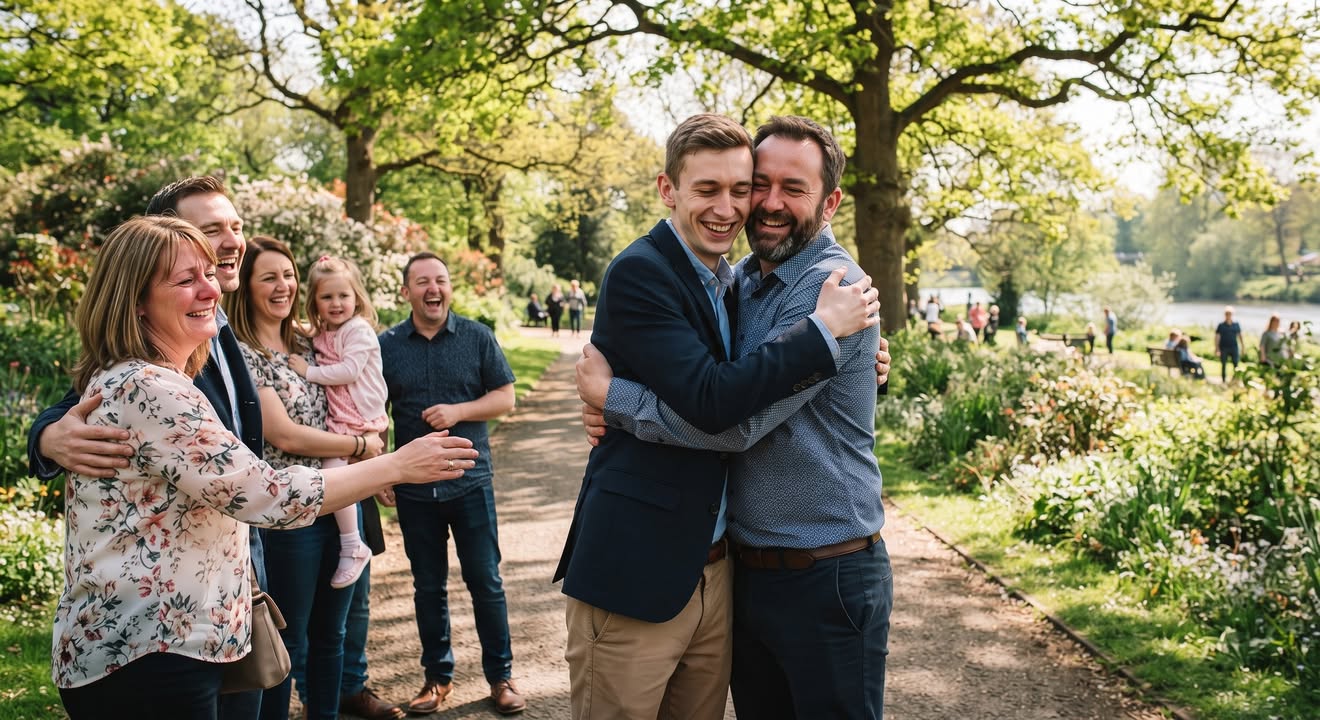
In May 2025, Luke Melling stood in a park in Preston, England, waiting to meet a man who had helped save his life. The man was Alastair Hawken, a father of three from Lincolnshire. They had never met in person, but Luke had been carrying Alastair’s donated stem cells inside his body for three years.
Luke had travelled all the way from Melbourne, Australia, with his mother, Sue. When Alastair arrived, the two men immediately embraced. Sue joined them, finally getting to thank the stranger whose generosity had given her son another chance at life. Three years earlier, Luke had been fighting a cancer that doctors were running out of ways to treat.
Searching the World for One Person
Luke was just 16 when he was diagnosed with Hodgkin lymphoma, a cancer that affects the lymphatic system. He spent years going through treatment, including chemotherapy and clinical trials. There were periods when the cancer appeared to be under control, but it repeatedly returned.
By 2021, Luke was receiving treatment at the Royal Melbourne Hospital under hematologist Dr. David Ritchie. When the cancer returned yet again, his doctors recommended a stem cell transplant using healthy cells from another person.
The treatment offered hope, but it came with a major problem. Luke needed a donor whose tissue type matched his closely enough for the transplant to work.
Doctors first tested his sister, but she wasn’t compatible. They searched Australia’s stem cell donor registry and couldn’t find anyone suitable.
Eventually, the search expanded to international registries, looking through potential donors around the world. And finally, they found someone.
There was one person listed as a perfect match. He lived in the United Kingdom, approximately 17,000 kilometres away.
Because of medical privacy rules, Luke wasn’t given the man’s name or any personal details. All he knew was that someone on the other side of the world might be able to help him.
Fourteen Years on a Donor Registry
The mystery donor was Alastair Hawken, a father of three living in Grantham, Lincolnshire. Alastair had first registered with the NHS Stem Cell Donor Registry in 2008, fourteen years before anyone contacted him about a possible match.
His decision to become a donor came from a personal experience. When Alastair was 23, his mother died from cancer. During her treatment, she had needed several blood transfusions. After losing her, Alastair began donating blood as a way of helping other families facing similar circumstances.
During one of his regular blood donation appointments, he joined the stem cell registry as well. He knew there was a possibility that somebody might need his help someday, but years passed without a call.
Then, in 2022, he learned that he was a match for a patient in Australia. Alastair agreed to donate.
In April, he underwent a stem cell collection procedure that lasted several hours. The process involved collecting stem cells from his blood, similar to an extended blood donation.
The cells were then prepared for their extraordinary journey. Because COVID-related travel complications made international shipping more difficult, the donated cells were frozen before being transported from England to Australia. The shipment travelled roughly 17,000 kilometres to reach the hospital where Luke was waiting.
A Transplant and Another Long Wait
Luke received Alastair’s stem cells in May 2022. After the transplant, he spent approximately 100 days in isolation while his immune system recovered. Doctors monitored him closely as his body began rebuilding its ability to fight infections.
For a young man who had already spent years dealing with cancer treatments and relapses, it was another difficult period. But this time, the donor cells offered the possibility of getting his life back.
Meanwhile, Alastair was still in England, wondering what had happened to the stranger who received his donation. He didn’t know Luke’s name, where he lived, or whether the treatment had been successful.
Under Australia’s donor privacy rules, the two men couldn’t immediately exchange personal information. They had to wait two years before they could make direct contact.
When the waiting period ended in 2024, Luke asked to contact the man who had donated his cells. Alastair eventually received a message, but there was an unexpected delay.
It had landed in his spam folder. For several weeks, Luke waited for a response, not realizing that his message was sitting unnoticed among Alastair’s unwanted emails. Once Alastair discovered it, they began talking.
From Video Calls to a Meeting in England
Luke and Alastair exchanged messages and started having video conversations, finally learning about the person on the other side of the transplant.
Luke told Alastair about his illness and recovery. Alastair shared what had led him to become a donor and how surprised he had been to discover that someone needed his cells after fourteen years on the registry. As they got to know each other, they discovered that both families had connections to Preston in Lancashire.
Luke was planning a trip to England to visit relatives, so he asked Alastair whether they could finally meet in person. He also wanted to take Alastair and his family out for dinner as a thank-you. They agreed to meet in Avenham Park in Preston in May 2025.
Luke travelled from Melbourne with his mother, Sue. Three years after a frozen bag of donated stem cells had made the journey from England to Australia, Luke was healthy enough to make the return trip himself. When the two men finally saw each other, they walked toward one another and hugged.
Sue joined the embrace, thanking Alastair for helping her son survive an illness that had dominated his life since he was a teenager. For Alastair, a few hours spent donating stem cells had led to a friendship with someone he hadn’t even known existed.
For Luke, it meant finally meeting the person who had given him a future he once feared he might never have.
Getting Back to Ordinary Life
By November 2025, the Royal Melbourne Hospital was sharing Luke’s story as an example of what international stem cell donor registries could make possible. Luke was now 32 and looking forward to returning to work and rebuilding the ordinary routines that cancer had interrupted for so many years.
He and Alastair remained in contact after their meeting. NHS Blood and Transplant also shared their story, encouraging more people to consider joining the stem cell donor registry. Alastair had originally signed up in 2008 because he wanted to help someone the way blood donors had helped his mother.
For fourteen years, he had no idea whether that decision would ever make a difference.
Then one day, a stranger in Australia needed him.