Remarkable Stories
People Were Drowning, So He Spent Decades Building Bridges
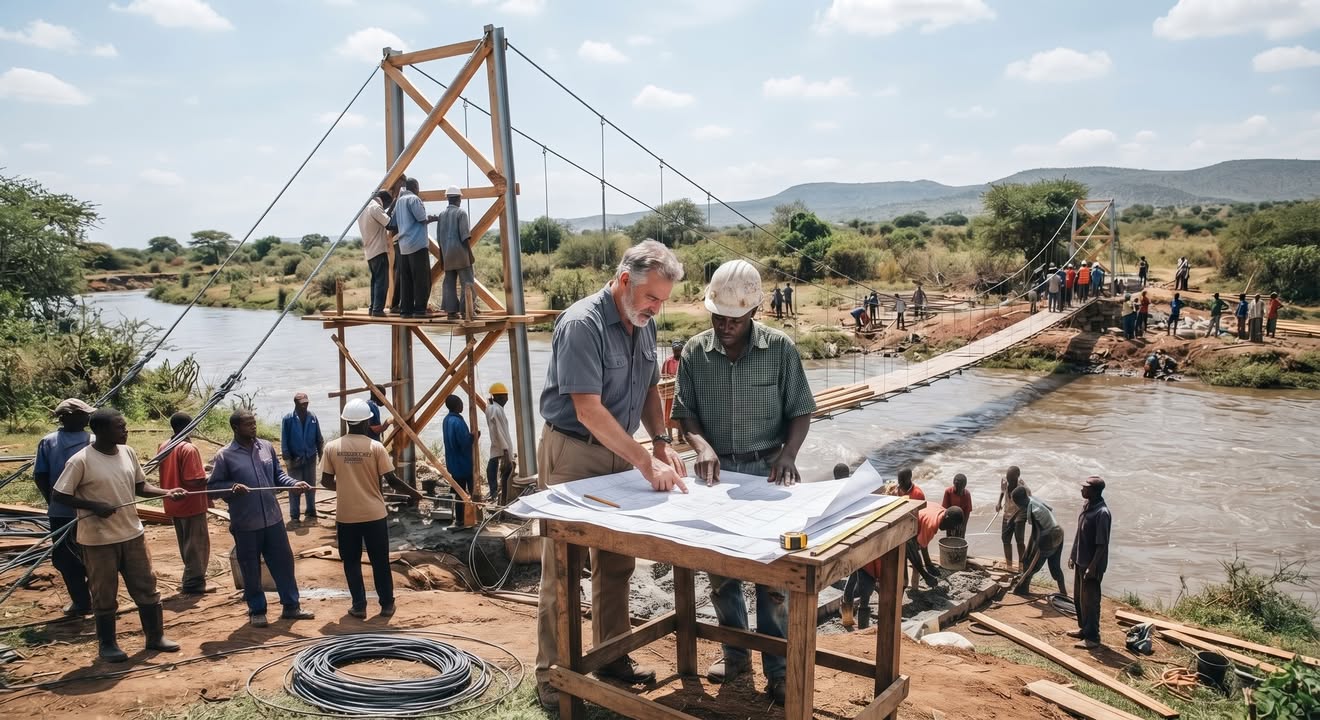
Harmon Parker was working in rural Kenya when a community asked him to help build a footbridge. He had construction skills, but he had not arrived with plans to spend his life building crossings.
The request put a practical problem in front of him. People needed to reach schools, clinics and markets on the other side of a river, and during heavy rains the crossing could become dangerous or impossible.
Parker helped build the bridge. Then requests began arriving from other communities facing the same problem.
The River Could Decide Whether You Got There
For people living near these crossings, the danger was part of ordinary life. A journey that was manageable in dry weather could become a serious risk when rain raised the water.
Waiting for a river to fall might mean missing school, losing a chance to sell produce or postponing medical care. People sometimes attempted the crossing anyway, and Parker heard accounts of residents being swept away.
He was a master mason from Kentucky who had come to Kenya in 1989. Development work eventually brought him into contact with communities where his building experience could help solve the crossing problem.
His first bridge project came in the mid-1990s. What appeared to be a single construction job became a much longer commitment, and in 2003 he established the nonprofit that became Bridging the Gap Africa.
The Community Had to Be Part of It
Parker’s approach depended on residents asking for the bridge and helping build it. The people who lived beside the river understood where they needed to cross and what happened when the water rose.
The organization brought technical knowledge and construction support. Community members contributed labor and materials, including sand and gravel, and helped with work such as preparing foundations.
That involvement also gave the project a clear purpose before construction began. A proposed bridge needed to address a dangerous crossing and improve access to something essential, such as education, health care or trade.
The work was therefore shaped by the people who would use it. A crossing was chosen because residents needed a safe route to places already central to their lives.
Small Bridges Still Required Serious Work
These were footbridges, designed for people traveling on foot rather than vehicles. Their relatively modest size helped make projects possible in places where a road bridge would require far greater resources.
In 2010, CNN reported that Parker’s bridges averaged about 120 feet long and cost around $6,000 at the time. Even at that scale, funding limited the organization to roughly five or six projects a year.
Engineering partners helped develop the work. Baylor University students collaborated on a 130-foot bridge in West Pokot in 2006, bringing additional technical help to a remote crossing.
Each project required more than getting materials over a river. The team had to create a structure that could remain useful through the conditions that had made the original crossing unsafe.
The Work Continued After the Recognition
When CNN named Parker one of its Top 10 Heroes in 2010, he had helped build 45 footbridges in Kenya. The recognition introduced his work to a much wider audience.
The organization continued building afterward. Its website now reports more than 90 bridges and marks three decades of work, with Kenyan engineers and construction staff helping carry it forward.
That broader team allows projects to draw on experience accumulated across many different rivers and communities. Parker’s original response to one request has become a repeatable construction effort.
One of the sites he described during his CNN recognition showed why the requests kept coming. Four people had drowned at the crossing earlier in 2010, he said, and his team was building a 42-metre bridge there.
On the other side were schools, clinics, churches and a market center.
The residents already had reasons to make the journey; now they would have a bridge to walk across.